Psychological Thriller Visual Language is about how a film thinks.
Every frame becomes a cognitive space. Every shadow and compositional choice becomes part of a psychological architecture. In this genre, the camera maps perception.
Unlike action or spectacle-driven storytelling, psychological thrillers are built around interior tension: broken memory, paranoia, repression, moral ambiguity, trauma. These elements are invisible in literal terms. They cannot be photographed directly. And so, Psychological Thriller Visual Language becomes the tool through which the invisible becomes cinematic.
In Yohana’s World, visual language is the structural backbone of the narrative. The world bends, space breathes, nothingness expands and distortion enters without announcement.
The audience see what the protagonist feels. They see it often before Yohana does.
My attempt for this article is to explore how Psychological Thriller Visual Language operates as a psychological map, first from an objective craft perspective, then through its subjective execution inside Yohana’s World.
Psychological Thriller Visual Language and Emotional Cues
In many genres, visuals establish setting. In psychological thrillers, visuals establish and must establish emotion.
A widely cited principle in film theory which I have read is that cinema communicates beyond dialogue and through image systems, basically the likes of composition, light, rhythm and spatial design.
Visual storytelling operates beneath spoken language, often shaping audience response subconsciously.
Psychological Thriller Visual Language treats visuals as emotional cues rather than decorative elements. Key components include:
- Color temperature to evoke psychological states (cold detachment vs. warm instability).
- Contrast and shadow to suggest hidden truths.
- Framing and isolation to communicate alienation.
- Repetition of motifs to reflect obsession.
Films such as Black Swan and Shutter Island demonstrate how environment mirrors mental state. The world shifts subtly as the protagonist’s perception destabilizes. The viewer may not consciously register every shift but they surely feel it.
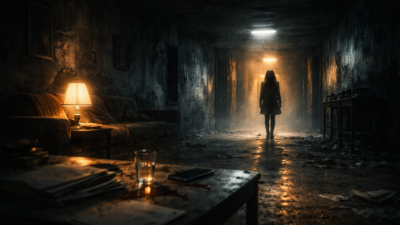
In this approach, a hallway is never just a hallway. It becomes a corridor of anxiety. A mirror is not just a reflective glass. it is a broken identity.
In Yohana’s World, emotional cues emerge through restrained vision. The visual world I have tried to develop is is subtly unstable.
Objects behave slightly outside natural law. Words form on walls. Shadows appear alive. A chalk outline corrects itself. A knife cuts vegetables without visible human touch.
While all of these happen, the camera remains composed and the environment shifts.
This restraint strengthens the Psychological Thriller Visual Language at work. The film has no demand that the viewer should feel disturbed. It actually allows the disturbance to surface quietly and therefore more deeply.
The emotional cues should always linger.
When the Camera takes sides
One of the defining features of Psychological Thriller Visual Language is the tension between objective observation and subjective experience.
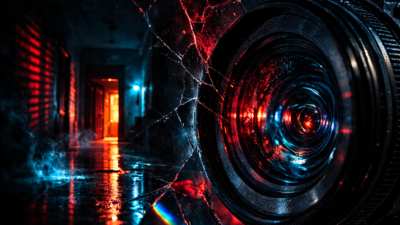
In conventional storytelling, the camera functions as a neutral witness. If I have to explain in simple terms, I would label it an invisible recorder of action. But in case of psychological thrillers, the camera becomes an interpreter.
Film theory experts often emphasize how vantage point shapes emotional alignment. Camera proximity, angle and focus determine how audiences psychologically attach to characters.
The shift from neutral observation to subjective immersion is one of the genre’s most powerful tools.
Camera choices are not neutral. They shape cognition:
- Close-ups internalize emotion.
- Dutch angles introduce imbalance.
- Shallow depth of field isolates consciousness.
- POV shifts collapse the distance between audience and character.
Psychological Thriller Visual Language often manipulates perspective so the audience questions what is real and what is constructed by the mind.
In Yohana’s World, something more restrained, and arguably more unsettling occurs.
The camera is observational. Almost neutral.
It does not aggressively distort perspective. It does not rely on erratic movement or dramatic angles to signal subjectivity.
Instead, the world itself distorts.
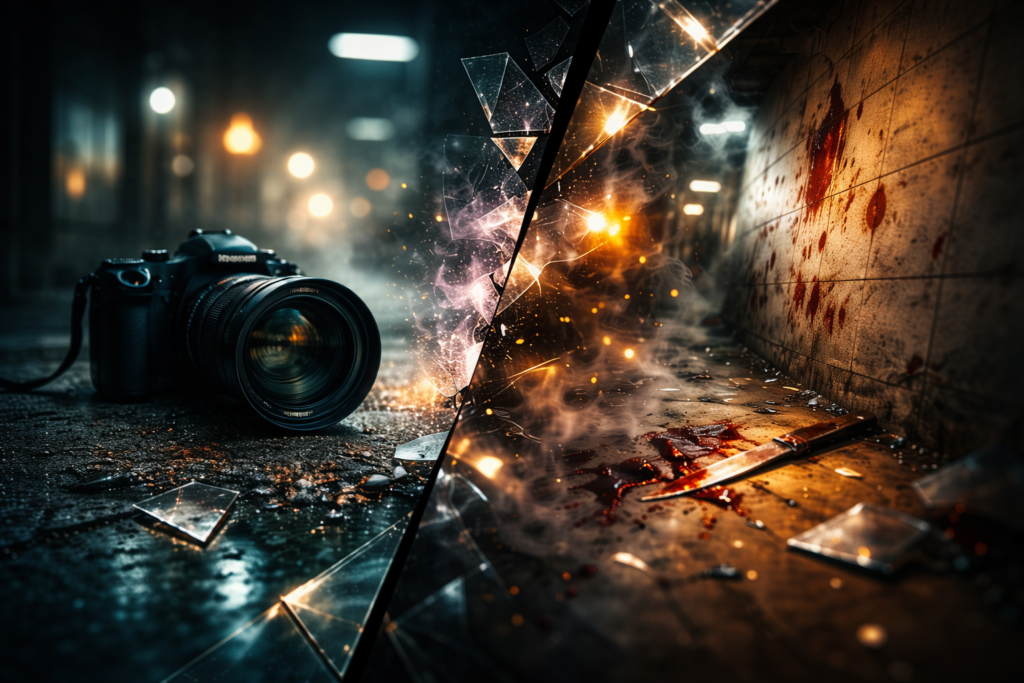
As I see it, the camera records these distortions without commentary. This creates a profound visual dissonance:
- The viewer is not forced into subjectivity.
- The viewer discovers it.
When objects behave in uncanny ways, the framing remains composed. When hallucinations surface, the camera does not panic. The world shifts while the lens remains steady.
This approach reflects Yohana herself: outwardly composed, internally distorted.
The camera trusts the world to reveal the psyche, rather than imposing the psyche through technical excess.
This is Psychological Thriller Visual Language operating at a structural level. Quiet, confident and psychologically immersive.
The Psychological Lens in Psychological Thriller Visual Language
The psychological lens is a design philosophy.
It asks:
How does the world look when filtered through unstable perception?
1. Distortion without spectacle
Distortion in Psychological Thriller Visual Language can manifest through small environmental anomalies.
In many thrillers, distortion appears gradually:
- Sound delays.
- Flickering lights.
- Visual echoes.
- Unexplained spatial inconsistencies.
In Yohana’s World, distortion appears integrated into reality rather than layered on top of it. Hallucinatory text forms on walls. Auras emerge around arguing figures. Chalk outlines animate briefly before settling back into stillness.
The world behaves like a thought process.
This subtle distortion aligns with psychological realism rather than fantasy. It may appear like so, but it is not. It respects the viewer’s intelligence and deepens immersion.
The story you are writing now should do the same.
2. Space as Psychological Territory
Space in Psychological Thriller Visual Language is rarely neutral.
Spatial design influences emotional interpretation:
- Tight framing increases pressure.
- Wide negative space suggests emotional void.
- Symmetry can imply repression.
- Asymmetry suggests imbalance.
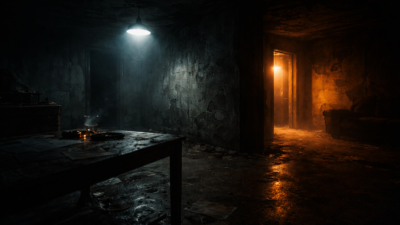
In Yohana’s World, rooms often feel slightly too still. Corridors seem elongated. Morgue spaces feel acoustically empty.
Silence stretches inside these spaces.
The system built is now a fully blown psychological terrain.
3. Silence behind Dialogue
Many psychological thrillers build tension through rapid dialogue exchanges. Yet one of the most powerful components of Psychological Thriller Visual Language is the ability to show silence.
Silence creates anticipation. It invites thinking. It forces the audience to lean forward.
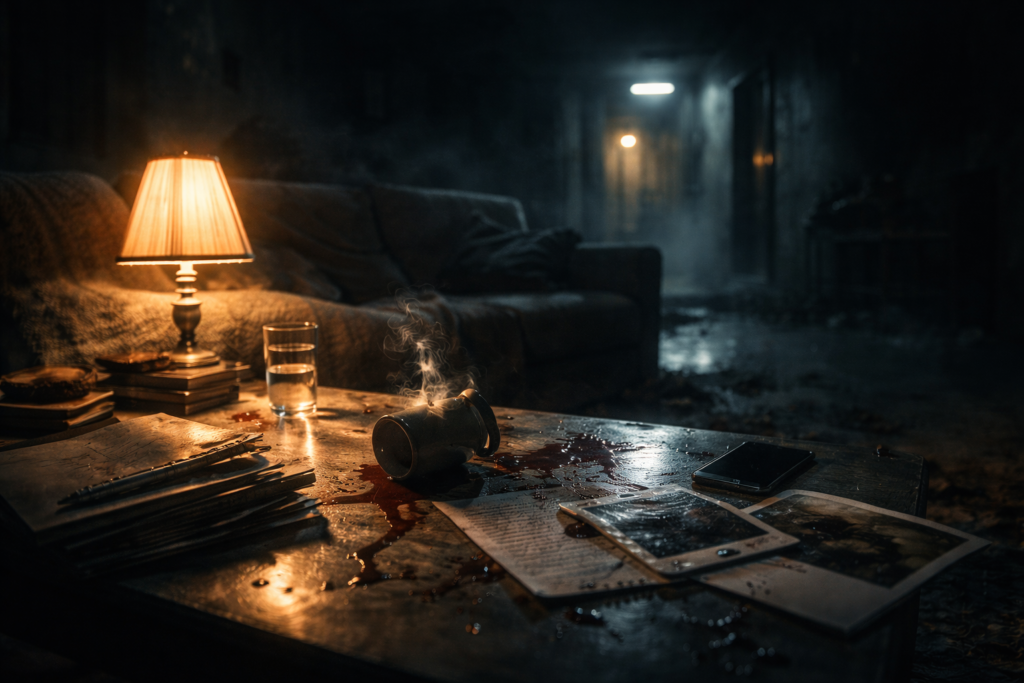
In Yohana’s World, dialogue exists within silence rather than dominating it. Characters speak in fragments. The environment remains unresponsive. Television plays on mute. Rooms feel acoustically hollow.
I have tried to write silence in a way that it becomes meaningful sound.
And in my reading, it feels louder than dialogue itself.
Composition as Inner Hierarchy
Composition in Psychological Thriller Visual Language determines what the audience prioritizes emotionally.
Visual hierarchy can:
- Isolate a protagonist from others in frame.
- Suggest psychological separation.
- Highlight objects tied to trauma.
- Emphasize absence.
In Yohana’s World, I have tried writing in a way as if composition frequently places Yohana slightly detached from her environment. She is framed with space around her not crowded, but separated.
This subtle isolation reinforces internal fragmentation.
The viewer will feel her distance long before it is verbalized.
Motif and Repetition in Psychological Thriller Visual Language
The most important section of this article in my opinion.
Psychological thrillers rely heavily on visual motifs to construct subconscious continuity.
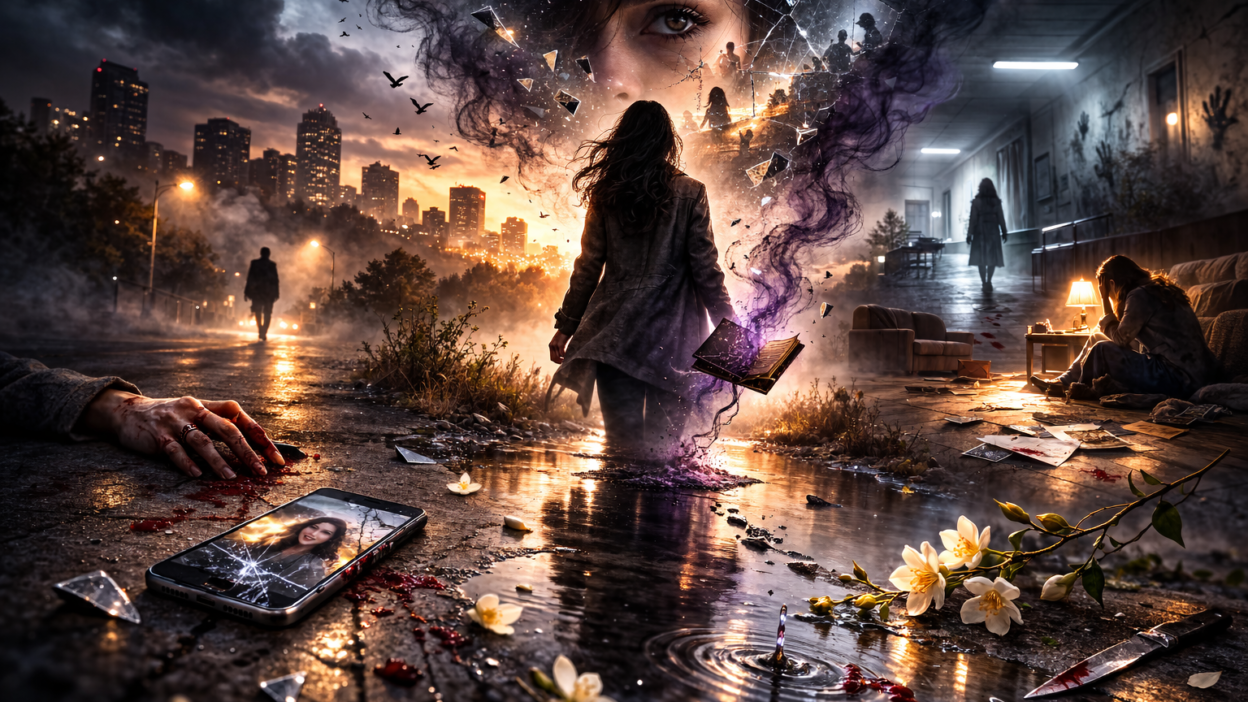
Recurring imagery like flowers, shadows, journals, wounds, reflections become part of the film’s cognitive map.
In Yohana’s World, recurring elements include:
- Jasmine buds.
- Shadows extending unnaturally.
- A purple diary.
- Blood as both literal and symbolic presence.
- Hands clenching, releasing, trembling.
These motifs create and carry psychological layering. They showcase unresolved tension without explicit exposition.
This is Psychological Thriller Visual Language functioning as emotional memory.
Why Psychological Thriller Visual Language matters to the Film Market
From a development and investment standpoint, Psychological Thriller Visual Language distinguishes cinematic scripts from dialogue-heavy thrillers.
A screenplay that demonstrates visual intelligence:
- Proves directorial potential.
- Reduces reliance on exposition.
- Enhances audience immersion.
- Appeals to prestige and streaming markets focused on psychological depth.
Today’s audiences increasingly gravitate toward atmospheric, perception-driven storytelling. Films that rely on internal tension rather than surface spectacle maintain longer emotional impact and stronger discussion longevity.
Yohana’s World is written for this landscape.
It is perception-driven.
Its visual language is already embedded at the screenplay level, meaning it is not dependent solely on post-production styling. The psychological architecture exists in the narrative DNA.
Strong visual language increases:
- Cinematic identity.
- Festival positioning potential.
- Streaming platform interest.
- Long-term brand differentiation.
When your screenplay contains a coherent visual philosophy. Distortion integrated with realism, silence structured intentionally and composition reflecting psychology, it demonstrates creative maturity.
Yohana’s World offers precisely that.
Its Psychological Thriller Visual Language is restrained, layered and structurally integrated. The camera observes. The world shifts. The silence speaks.
The audience is invited to discover distortion, not commanded to react to it.
And that distinction matters.
Invest in Yohana’s World
Yohana’s World is not simply a screenplay. It is a fully realized cinematic blueprint grounded in sophisticated Psychological Thriller Visual Language.
Available for direct acquisition at $555,000, the complete creative package includes:
- Full 118 page feature-length screenplay
- Detailed scene-by-scene breakdown
- Comprehensive character psychology profiles
- Visual language and thematic architecture guide
- Development notes and cinematic strategy materials
This is an opportunity to own not just a story but a psychologically layered, visually intelligent cinematic world.
If you are a Script/Story collector, a producer exploring the genre, a director trying to make your mark or an entertainer looking to woo your audiences, Yohana’s World might be your calling.
Register your interest on Yohana’s World official website.
Invest in Yohana’s World and own its vision to bring its psychological map to life.