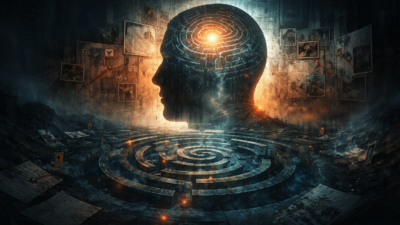
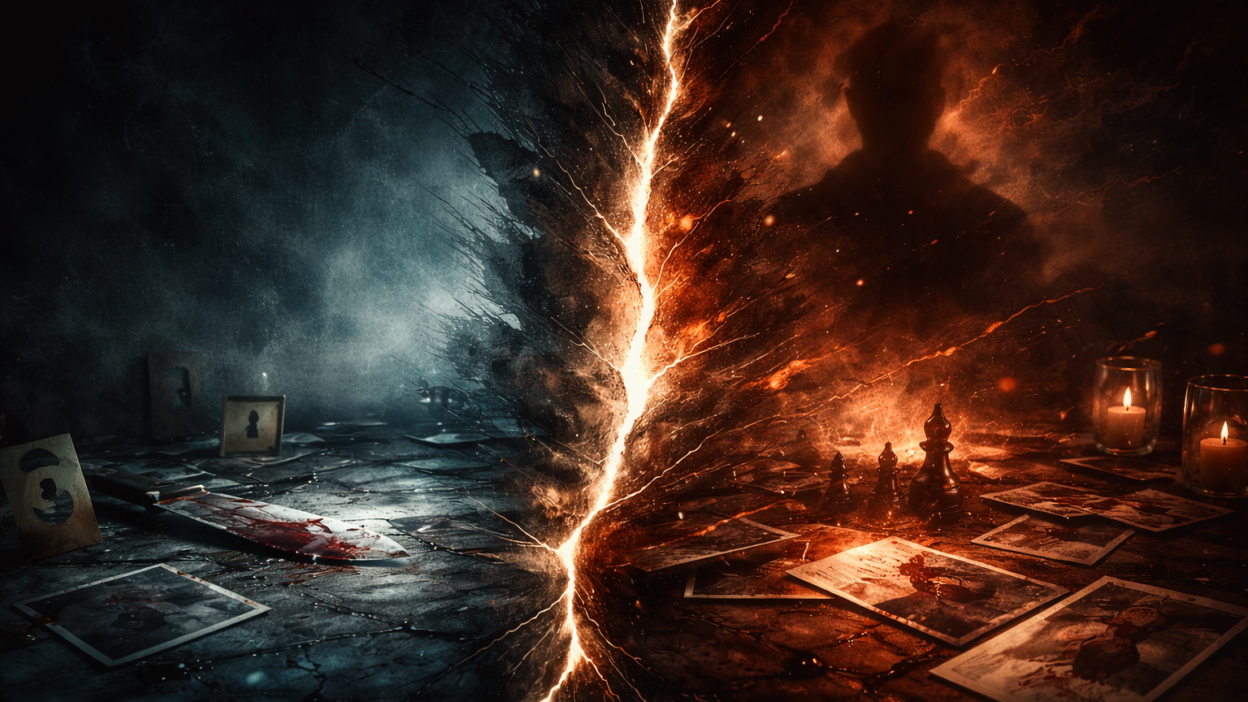
What makes a powerful psychological thriller antagonist?
Violence?
Plot twists?
A shocking reveal in the third act?
None of these sustain tension on their own.
What makes a psychological thriller antagonist unforgettable is emotional coherence.
Modern audiences are psychologically literate. They no longer fear villains who exist purely to obstruct a hero. They are unsettled by antagonists who believe they are justified. They are disturbed by wounded minds that operate with internal logic.
When an antagonist lacks emotional depth, conflict becomes mechanical.
But when a psychological thriller antagonist is shaped by abandonment, humiliation or unmet emotional needs, the story transforms.
The question then shifts from:
“Can he be stopped?”
To:
“How did he become this?”
That shift creates empathy.
And empathy destabilizes moral clarity, which is the lifeblood of psychological suspense.
Why pure evil is dramatically boring
Traditional thrillers often rely on archetypal evil. Antagonists who are cruel without cause, violent without psychology and obstructive without philosophy.
But one-dimensional villains collapse tension because they:
- Lack emotional logic
- Operate without any internal conflict
- Provide no philosophical opposition
- Fail to challenge the protagonist’s worldview
Without psychological coherence, conflict feels procedural.
A strong psychological thriller antagonist must not merely oppose the hero, he or she must also represent a competing belief system.
The audience does not need to agree with him. But they must understand him.
Understanding is far more destabilizing than hatred.
In Yohana’s World, the antagonist of the story is driven by recognition.
He was emotionally deprived. He felt secondary. He felt unchosen.
His deepest fear is not death. It is invisibility.
He fears being forgotten. Erased. Rendered irrelevant in a world he once believed he controlled.
That psychological wound is intimate. And this intimacy makes him dangerous.
He wakes up in the morning, wanting to matter.
The psychology of recognition and invisibility
In clinical psychology, narcissistic injury is often misunderstood. Do not consider it as merely arrogance.
It is a profound wound to identity.
When a child grows up feeling:
- Unchosen
- Emotionally sidelined
- Replaced
- A “charity case”
They often adapt in one of two ways:
- Withdrawal and suppression
- Dominance and control
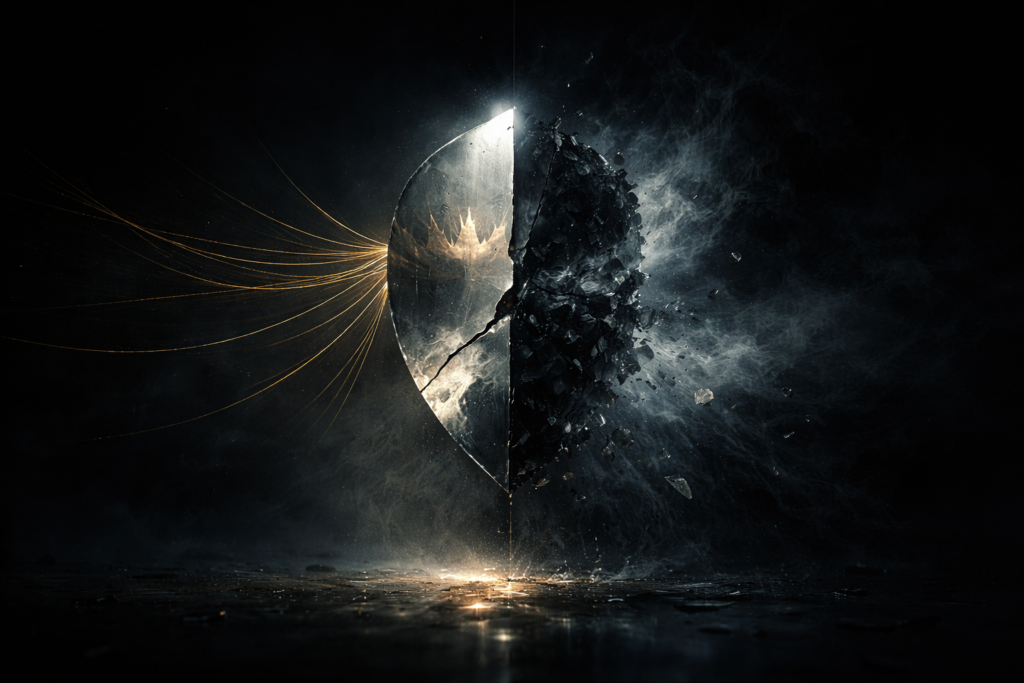
The second path often produces the modern psychological thriller antagonist. The one who needs power not for pleasure, but for validation.
Recognition becomes his oxygen.
Revenge becomes her proof of existence.
Control becomes his identity.
This is not some cartoon villainy. It is a broken attachment seeking compensation.
The antagonist in Yohana’s World once believed he belonged.
Then he experienced betrayal. An existential one.
He believed he was part of something permanent. Then he discovered he was just a peripheral in another’s life.
And so, the protector became predator.
Not because cruelty excited him. But because power promised stability.
He builds a made-up family externally; in the form of manipulated allies, because he never felt anchored in a real one.
Yohana, on the other hand builds her family internally. He builds his externally.
Both are safeguarding themselves.
But they chose different systems of survival.
Revenge as a medium for identity reconstruction
Revenge in psychological narratives often masquerades as healing.
For individuals who feel humiliated or erased, revenge offers:
- Restoration of agency
- Restoration of visibility
- Restoration of self-worth
The avenger tells himself:
“You made me invisible. I will make you see me.”
But revenge does not resolve abandonment. It reorganizes pain into control.
A psychologically coherent antagonist does not seek revenge because he enjoys suffering. He seeks it because he believes it restores balance.
That belief is what makes this psychological thriller antagonist compelling.
In Yohana’s World, the psychological thriller antagonist begins as an apparently secondary presence. Quiet, observant and composed.
But beneath that composure lies fragmentation.
He once had the potential to be a hero. He possessed affection. He possessed loyalty.
But betrayal hardened him.
His strategic thinking becomes manipulation. His commanding presence becomes intimidation.
He values power over truth. Control over understanding. Fear-driven loyalty.
He appears logical. But he is emotionally driven.
His endgames reveal volatility beneath the poise. His calm tone sharpens when angered.
His irritation leaks through small gestures.
The mask slowly slips.
And when it slips, we glimpse loneliness.
The Antagonist’s Mask
A strong psychological thriller antagonist wears a mask. Not necessarily a literal one, but emotional.
Surface traits often include:
- Calm speech
- Controlled posture
- Strategic intelligence
- Commanding presence
- Minimal visible vulnerability
This composure builds trust and menace simultaneously in the minds of the audience.
But the greater the surface control, the deeper the insecurity often buried beneath it.
The mask exists to prevent exposure.
Exposure would mean admitting fragility.
And fragility feels dangerous to someone who once felt discarded.

The antagonist in Yohana’s World carries himself with confidence.
Sharp features. Controlled movements. Dark tones. Minimal excess.
He treats most people as pawns and views loyalty as something earned through strength.
He has a symbol. A three-loop symbol, which represents family.
But it is not organic family. It is an engineered belonging.
He cannot tolerate being destabilized.
And as the Protagonist’s job, it is Yohana who destabilizes him.
The Antagonist underestimates emotional strength.
He believes logic wins wars. That blind spot becomes his breaking point.
The Shadow Self Theory
Carl Jung’s Shadow Self Theory suggests that individuals repress aspects of themselves they deem unacceptable.
In psychological thrillers, antagonists often embody the traits protagonists suppress.
They are not exact mirrors. They are divergent possibilities.
They represent what the protagonist could become under different emotional choices.
This is what elevates a psychological thriller antagonist from obstacle to thematic force.
Yohana and the antagonist share abandonment.
They simply diverge in response.
Yohana:
- Internalizes pain
- Suppresses emotion
- Avoids power games
- Protects imagination
- Maintains external control
The Antagonist:
- Externalizes pain
- Manipulates others
- Seeks dominance
- Protects ego
- Explodes when challenged
Yohana survives quietly. He survives loudly.
Yohana avoids recognition. He demands it.
They are forks in the same road.
And that divergence creates the philosophical core of my story.
Redemption and Emotional collapse
When a psychological thriller antagonist:
- Accepts responsibility
- Justifies his actions
- Collapses emotionally
The audience enters a state of moral discomfort.
Black and white dissolve into gray.
An execution ends fear. An arrest invites reflection.
And reflection always lingers longer.
A villain who dies remains a threat defeated.
A villain who confesses becomes a wound exposed.
That exposure unsettles. Always unsettles.

In the final confrontation in Yohana’s World, the Antagonist does not deny.
He justifies. He accepts responsibility. And he collapses.
Humanly.
His final monologue is is confession.
Of exclusion. Of being left out. Of never feeling fully claimed.
Justice arrives. He is arrested.
But he lives. And that living forces us to sit with complexity.
This complexity is the audience’s true psychological aftershock.
Why a psychologically coherent Antagonist matters
A layered psychological thriller antagonist offers:
- Strong lead performance opportunity
- Emotional depth for actors
- Audience empathy without endorsement
- Franchise potential rooted in character complexity
- Narrative sustainability beyond shock value
In Yohana’s World, the antagonist is an entire thesis.
Unprocessed abandonment, paired with intelligence and pride, becomes tyranny.
Imagine it as pain weaponized.
And weaponized pain is far more unsettling than chaos.
And so I present to you Yohana’s World.
It is a fully developed psychological system, where the psychological thriller antagonist is as layered as the protagonist.
Available for direct acquisition at $555,000, the complete package includes:
- Full feature-length 118 page screenplay
- Scene-by-scene structural breakdown
- Detailed protagonist and antagonist psychology profiles
- Symbolic and visual language guide
- Narrative tension mapping
- Thematic design documentation
For producers, development executives and story collectors seeking psychologically coherent antagonists and emotionally layered IP, now is your time to invest in Yohana’s World.
Register your interest on Yohana’s World official website.
Because the most powerful psychological thriller antagonist is not the one who terrifies.
It is the one who makes us understand and then forces us to confront what that understanding reveals about our own self.