
Psychological thriller characters are among the most powerful narrative engines in modern cinema. While many films rely on spectacle: explosions, large-scale action or complex visual effects; to create excitement, psychological thrillers take a fundamentally different approach. They draw power from the human mind.
Fear, paranoia, guilt, obsession and moral ambiguity become the driving forces of the story. These emotional currents create tension through internal instability. The audience is inhabiting the psychological state of the characters.
For producers, this narrative model offers a strategic advantage that is often overlooked. When psychological thriller characters drive the story, emotional intensity replaces physical display of power.
Scenes gain dramatic weight through performance, atmosphere and subtle shifts in perception rather than expensive action sequences.
This transforms character psychology into something more than a storytelling device. It becomes a form of production efficiency. Internal conflict reduces reliance on large-scale infrastructure while simultaneously deepening the audience’s emotional engagement.
In psychological thrillers, character psychology becomes the engine that powers the entire production.
The Myth of spectacle as story engine
In many corners of the film market, there is a persistent belief that narrative impact must be tied to display of drama. The assumption is simple: the bigger the visual scale, the greater the audience engagement.
This thinking drives many productions toward:
- elaborate action choreography
- large visual effects pipelines
- expansive set pieces
- complex stunt coordination
While these elements can create memorable cinematic moments, they also introduce significant financial volatility. Large-scale sequences require extensive planning, specialized crews, safety infrastructure and significant post-production work.
Psychological thrillers challenge this assumption.
Instead of relying on spectacle as the primary storytelling mechanism, they derive tension from the interior lives of characters. Emotional instability replaces physical destruction. Suspicion replaces visuals. Moral ambiguity replaces explosive action.
At the center of this model are psychological thriller characters whose inner conflicts generate continuous narrative momentum. Fear of discovery, unresolved trauma, guilt and paranoia create pressure that moves the story forward without requiring expensive visual escalation.
For producers, this represents one of the most efficient storytelling structures in cinema. The narrative intensity grows organically through character psychology rather than through production scale.
When executed effectively, the audience becomes invested in a character’s emotional unravelling.

In Yohana’s World, the narrative engine is deeply rooted in psychological instability rather than physical chaos. The protagonist operates within a mental landscape shaped by trauma, perception shifts and unresolved emotional conflict.
This internal tension becomes the source of suspense. The story does not require large-scale action sequences because the character’s psychological state already creates continuous pressure.
Moments of hesitation, emotional triggers and perceptual uncertainty carry dramatic weight. The audience is meant to experience Yohana’s fragile psychological balance.
This approach allows the story to expand emotionally while remaining disciplined in its production demands. The tension arises from the mind of the character rather than from the destruction of the environment.
In essence, Yohana’s World demonstrates how psychological thriller characters can transform internal conflict into cinematic momentum.
Psychological thriller characters as narrative engines
Narrative momentum in psychological thrillers often comes from internal conflict rather than external obstacles.
Traditional action storytelling escalates tension through increasingly large physical events. Psychological thrillers take the opposite approach. They deepen tension by exploring the mental states of the characters.
The most effective psychological thriller characters often grapple with internal struggles such as:
- fear of exposure
- unresolved trauma
- obsessive thinking
- moral compromise
- broken perception of reality
These psychological forces act as narrative engines that continuously generate suspense.
A character haunted by guilt may interpret ordinary events as threats. A character consumed by paranoia may begin to mistrust allies. A character struggling with moral ambiguity may make decisions that intensify conflict.
Each of these internal dynamics creates narrative progression without requiring physical escalation.
From a production standpoint, this allows filmmakers to sustain tension across long stretches of the film using performance and atmosphere rather than display. The audience remains engaged because they are invested in the character’s emotional journey.
The protagonist of Yohana’s World embodies several layers of psychological complexity. Her past experiences influence how she perceives present events and her emotional state shapes the way she interprets the world around her.
This internal instability becomes the narrative engine.
Scenes that might otherwise appear simple on the surface gain dramatic weight through her psychological responses. The tension arises from her interpretation of events rather than from physical action.
In this way, the story demonstrates how psychological thriller characters can sustain suspense through emotional depth alone.
Dialogue as a low-cost high-impact Tool
Psychological thrillers often replace display of action with performance-driven tension. Among the most powerful tools available to filmmakers is dialogue.
Unlike large action sequences, conversations between characters require minimal production infrastructure. Yet when executed effectively, they can generate extraordinary suspense.
Subtext plays a critical role in this dynamic. Characters may speak calmly while concealing deeper emotional conflicts. Words carry multiple meanings. Silence also becomes a form of communication.
Well-written dialogue allows psychological thriller characters to reveal internal struggles without overt exposition. A pause in conversation, a slight hesitation or a subtle change in tone can signal deeper emotional turmoil.
Silence can be even more powerful. In many psychological thrillers, the absence of dialogue heightens tension by forcing the audience to focus on subtle behavioral cues.
From a production perspective, these moments are remarkably efficient. A scene driven by dialogue and performance can generate intense suspense without requiring expensive visual elements.

In Yohana’s World, several moments rely on restrained exchanges between characters rather than dramatic confrontations. Silence often carries as much meaning as spoken dialogue.
Yohana’s emotional state shapes how she interacts with others and these interactions become moments of psychological tension.
These scenes demonstrate how psychological thriller characters can transform simple conversations into powerful narrative events.
Controlled locations and expanded psychology
Another advantage of psychological storytelling is the ability to maintain narrative intensity within controlled environments.
Many successful psychological thrillers unfold in relatively limited settings such as:
- apartments
- offices
- interrogation rooms
- suburban homes
- isolated buildings
By focusing on character psychology rather than visual display of action, filmmakers can maintain dramatic tension without constantly shifting locations.
This approach benefits producers by reducing logistical complexity. Fewer locations mean lower transportation costs, simplified scheduling and greater control over lighting and production design.
When the narrative is driven by psychological thriller characters, the emotional stakes of the scene become more important than the physical scale of the environment.
A single room can become a site of intense drama if the characters within it carry sufficient psychological weight.
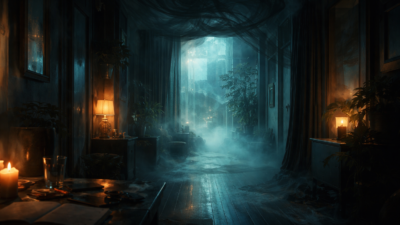
The environments in Yohana’s World are carefully chosen to support the psychological atmosphere of the story.
Rather than relying on expansive landscapes or large-scale environments, the film focuses on spaces that allow emotional tension to emerge gradually.
These locations become extensions of Yohana’s internal state. The environment reflects her psychological condition, creating an atmosphere that reinforces the story’s themes.
This design strategy highlights how psychological thriller characters can transform even controlled environments into spaces of intense narrative pressure.
Psychological thriller characters as production value
In many genres, production value is associated with visible scale. The likes of large sets, expensive costumes or elaborate visual effects.
Psychological thrillers redefine this concept.
In this genre, the true production value often comes from performance. When actors embody complex emotional states, their performances become the primary source of visual display.
The audience witnesses transformation rather than destruction. They observe subtle shifts in behavior that reveal deeper psychological conflict.
Producers who understand the importance of psychological thriller characters recognize that investing in strong casting and rehearsal can produce greater narrative impact than investing in elaborate set pieces.
A powerful performance can hold an audience’s attention far more effectively than visual spectacle alone.

The central role in Yohana’s World requires a performer who plays Yohana, capable of navigating multiple emotional layers simultaneously.
The character must balance strength with vulnerability, logic with instability and determination with fear.
This psychological complexity becomes the film’s primary dramatic force. A compelling performance transforms internal conflict into visible tension.
In this way, the film demonstrates how psychological thriller characters can become the most valuable production asset.
Budget discipline through Psychological thriller characters
When internal conflict drives the narrative, producers gain greater flexibility in budget allocation.
Instead of funding large-scale spectacles, resources can be directed toward elements that enhance psychological immersion, such as:
- lighting design
- sound design
- art direction
- performance preparation
These elements strengthen atmosphere and support character-driven storytelling.
Sound design, for example, can subtly influence the audience’s emotional state through environmental noise or strategic silence. Lighting can obscure visual information, encouraging viewers to imagine what lies beyond the frame.
These choices reinforce the psychological dimension of the film while maintaining financial discipline.
When psychological thriller characters drive the narrative, the story remains compelling even without expensive visual escalation.
The design philosophy behind Yohana’s World prioritizes atmosphere and character psychology.
Rather than escalating through visual display of power, tension emerges through shifts in perception and emotional instability. Lighting, sound and performance work together to create an immersive psychological environment.
This disciplined approach allows the film to maintain narrative intensity while preserving production efficiency.
Producer Takeaway
Psychological thrillers reveal a powerful truth about filmmaking:
Constraint can become a creative advantage.
When psychological thriller characters drive the story, internal conflict replaces physical spectacle as the primary source of tension.
This approach allows producers to:
- reduce reliance on expensive action sequences
- maintain controlled production environments
- invest resources in performance and atmosphere
- sustain narrative intensity through character psychology
In this genre, emotional depth becomes production value. The audience’s engagement is driven by the psychological journeys of the characters.
The philosophy explored in this article lies at the core of Yohana’s World.
The screenplay is designed around psychological thriller characters whose internal conflicts drive the narrative forward. Emotional instability, moral ambiguity and perceptual uncertainty create suspense without requiring spectacle-driven escalation.
These elements allow the story to expand dramatically while remaining disciplined in its production architecture.
The complete Yohana’s World project package is currently available for acquisition.
$555,000
Included:
• Full 118 page screenplay
• Scene-by-Scene breakdown
• Character psychology profiles
• Visual language framework
• Structural beat analysis
For producers seeking a prestige project built around compelling psychological thriller characters, Yohana’s World offers a fully engineered narrative architecture ready for development.
Register your interest on Yohana’s World official website.