

Point of View in Psychological Thriller cinema is one of the most powerful mechanisms through which filmmakers shape audience perception. Unlike many other genres where the camera functions as a neutral observer, psychological thrillers frequently transform the camera into a participant in the narrative: an extension of the character’s mind.
In this genre, the camera interprets the events happening. It chooses where to look, when to hesitate, when to move closer and when to remain distant. These choices create what can be described as visual bias, a subtle manipulation of perspective that guides the audience’s emotional and psychological alignment with the story.
The result is an experience where the viewer is no longer merely watching a narrative unfold. Instead, the audience inhabits a perspective. Sometimes reliable, sometimes deeply unstable.
This is the essence of Point of View in Psychological Thriller storytelling. The camera becomes a psychological instrument. It allows filmmakers to guide the audience through layers of perception and emotional tension.
In films that explore unstable memory, broken identity or unreliable perception, the camera itself becomes part of the narrative structure. Its movements, angles and rhythms communicate what the character feels before the story explains it.
In Yohana’s World, this approach is fundamental to the visual language of the film. The camera behaves not as an intrusive narrator but as a quiet witness to Yohana’s perception. The world appears composed on the surface, yet subtle visual distortions emerge within the frame.
The audience is not conveyed that something is wrong, they begin to feel it through the camera’s perspective.
In this way, Point of View in Psychological Thriller cinema transforms the camera into a mind: one that invites the audience inside the main character’s psychological terrain.
The unreliable eye: visual narration in Psychological Thrillers
Stories across different mediums rely on narrators to guide audiences through events. In literature, the narrator may be reliable, presenting events truthfully or unreliable, offering a distorted interpretation of reality.
Cinema possesses its own form of narration.
The camera.
Through framing, movement and perspective, the camera acts as a visual narrator. It determines which information reaches the audience and when that information appears.
In many film genres, this narrator behaves objectively. The camera presents the story world as it exists.
Psychological thrillers introduce a more complex possibility:
The camera may lie.
Film theorists often describe the camera as an invisible narrator because it shapes the audience’s understanding of the story.
What the camera shows and what it chooses not to show, directly influences how viewers interpret events.
In the context of Point of View in Psychological Thriller storytelling, this visual narration becomes deliberately unreliable.
The camera may align closely with a character’s perspective, presenting the world exactly as they perceive it. If that character’s perception is flawed or psychologically unstable, the audience inherits that distortion.
This technique has been employed in numerous psychological thrillers.
Films like Black Swan immerse viewers within the protagonist’s psychological experience. The audience initially trusts the visual narrative, only to later discover that certain images represent internal states rather than objective reality.
This creates a fascinating tension.
The viewer must constantly question what they see.
- Is the camera revealing the truth?
- Or is it revealing the character’s interpretation of the truth?
This uncertainty lies at the heart of Psychological Thriller cinema.

In Yohana’s World, visual narration operates through restraint.
The camera rarely announces subjectivity through exaggerated techniques. Instead, it remains composed, almost observational. The environment around Yohana begins to shift subtly, revealing fragments of distortion.
- Words appear where they should not exist.
- Objects behave in unusual ways.
- Silence carries emotional weight.
The camera simply observes.
This approach creates a powerful psychological experience for the audience. Because the camera does not overtly show unreliability, viewers initially trust what they see.
Gradually, that trust begins to fade away.
Through this quiet strategy, Yohana’s World uses Point of View to allow the audience to discover psychological instability rather than having it explicitly declared.
P.O.V shots : entering the character’s mind
One of the most direct tools used in Point of View in Psychological Thriller cinematography is the point-of-view shot.
P.O.V shots allow the audience to see the world exactly as a character sees it. The camera temporarily becomes the character’s eyes, collapsing the distance between observer and participant.
POV cinematography, as I understand it, has long been used to create emotional immersion. When the camera adopts a character’s visual perspective, the audience experiences the scene through that character’s sensory perception.
This technique can intensify identification with the protagonist.
In horror films, POV shots often place viewers inside moments of fear. In psychological thrillers, however, the effect is more complex.
Instead of simply sharing fear, the audience begins to inherit the character’s biases, assumptions and misunderstandings.
This is where Point of view becomes psychologically powerful. If the character’s interpretation of reality is flawed, the audience’s interpretation becomes flawed as well.
The viewer is no longer outside the narrative. They are inside the mind of the character.
In Yohana’s World, POV moments appear selectively rather than constantly. When they occur, they function as psychological entry points.
During emotionally intense moments, the audience briefly will experience the world exactly as Yohana perceives it. These glimpses allow viewers to understand her internal state without relying on explicit exposition.
However, even outside strict POV shots, the film maintains a subtle alignment with Yohana’s perspective.
Framing and camera placement echo her emotional condition.
Through these choices, Point of View in Yohana’s World becomes a continuous psychological connection between the viewer and the protagonist.
The language of camera movement
Movement in cinema carries emotional meaning.
A camera that glides smoothly through space suggests calmness and control. A camera that trembles or drifts suggests instability.
In psychological thrillers, camera movement becomes a visual language that mirrors mental states.
Different types of camera movement evoke different psychological responses.
- Slow pushes toward a subject gradually increase tension. As the frame closes in, the audience senses that something important, or unsettling is approaching.
- Handheld movement introduces instability. Slight tremors in the frame mimic emotional agitation or anxiety.
- Tracking shots guide the viewer through space, creating sensations of exploration or discovery.
Expert Filmmakers frequently use subtle camera pushes to intensify psychological tension. As the camera moves closer, the emotional pressure within the scene increases.
Through these techniques, Point of View in Psychological Thriller cinematography transforms movement into emotional expression.
The camera is now thinking.
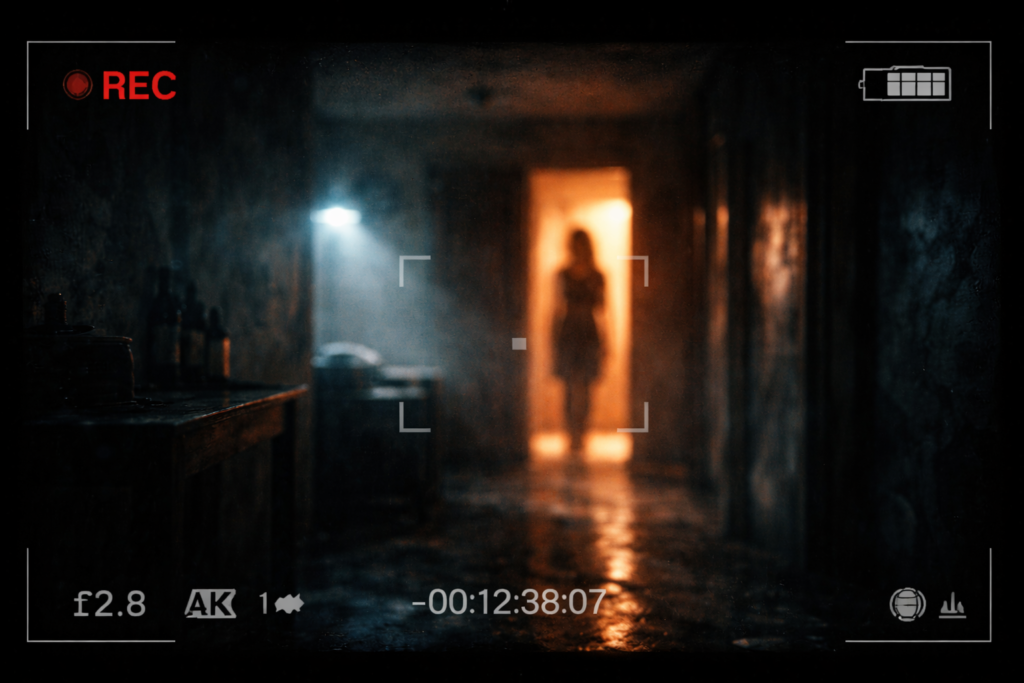
In Yohana’s World, camera movement remains deliberate and restrained.
Rather than aggressive motion, the camera often drifts slowly through space. These movements feel contemplative, almost hesitant.
This pacing reflects Yohana’s psychological experience.
Her world does not collapse suddenly. Instead, it gradually reveals hidden layers of meaning. The camera reflects this process, allowing tension to accumulate over time.
Through this subtle rhythm, Point of View in Yohana’s World becomes a reflection of mental exploration rather than visual spectacle.
Voyeuristic angles and surveillance aesthetics
Psychological thrillers frequently employ voyeuristic camera angles: perspectives that suggest the viewer is observing events from a hidden or distant position.
These shots introduce a powerful psychological dynamic.
Voyeuristic framing places the audience in the role of observer.
The camera may watch characters from behind objects, through windows or from unusual angles that feel detached from the scene. This creates the sensation that the characters are being observed by an unseen presence.
The effect can be deeply unsettling.
Within Point of View in Psychological Thriller storytelling, voyeuristic perspectives raise an unsettling question:
“Who is watching whom?”
In Yohana’s World, voyeuristic framing occasionally reinforces emotional isolation.
The camera observes moments of vulnerability from subtle distances. These perspectives will create the feeling that the audience is witnessing something intimate or fragile.
The viewer then will become both participant and observer.
This duality will help reflect Yohana’s psychological state: caught between experiencing reality and questioning it.
Movement as a reflection of the Mind
Beyond individual camera techniques lies a deeper principle.
In psychological storytelling, camera movement often mirrors mental states.
As previously mentioned, a steady camera suggests clarity and control. Erratic movement suggests instability.
Drifting camera motion can evoke dreamlike disorientation. Static framing can create emotional confinement.
These visual rhythms influence how audiences interpret the psychological state of characters within the narrative.
Instead of explaining emotions through dialogue, filmmakers allow the camera to communicate them.
This is the deeper potential of Point of View in Psychological Thriller cinema.
The camera becomes an emotional language itself.
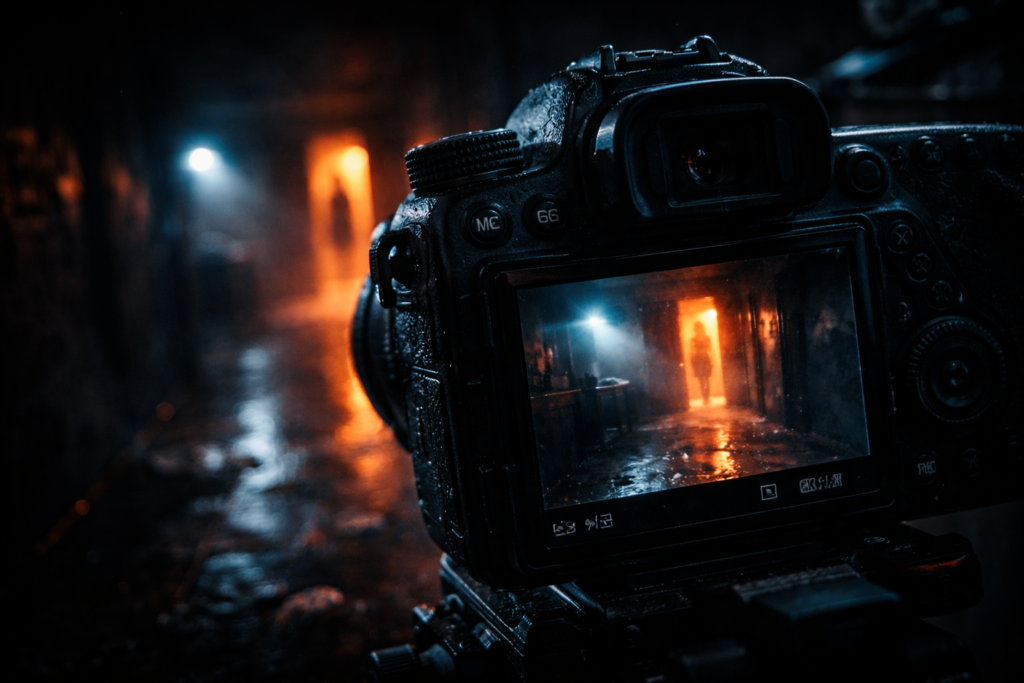
In Yohana’s World, the camera needs to feel psychologically tethered to Yohana’s perception.
It should move cautiously, revealing spaces slowly, as if uncertain of what may emerge.
This hesitation will reflect Yohana’s internal uncertainty.
The audience will sense that perception itself is unstable.
What appears within the frame may not represent the complete reality of the story.
Through this visual strategy, Point of View in Yohana’s World will transform the camera into an extension of the protagonist’s mind.
Visual bias and audience trust
When the camera becomes a mind, it also becomes a source of bias.
Every shot represents a decision about what the audience is allowed to see.
Framing then determines narrative emphasis.
- A close-up depicts emotional importance.
- A wide shot may suggest detachment.
By selecting specific perspectives, filmmakers can guide the audience’s interpretation of events.
Psychological thrillers often exploit this selective vision. They reveal fragments of the truth while withholding others.
When new information emerges later in the narrative, viewers realize that their earlier assumptions were shaped by the camera’s limited perspective.
In Yohana’s World, the camera’s visual bias will need to reflect the central theme of perception.
The audience will receive information gradually through images that will feel emotionally significant but narratively ambiguous.
This ambiguity will then reflect Yohana’s experience.
In the story, she is trying to understand her own reality.
And so should the viewer.
The camera as consciousness
In psychological thrillers, the camera becomes more than just a recording device.
It has the potential to become consciousness itself.
Through perspective and framing, Point of View in Psychological Thriller cinema transforms visual storytelling into a psychological experience.
The camera decides what the audience sees. It shapes interpretation, guides emotion and sometimes misleads the viewer entirely.
In Yohana’s World too, the camera quietly adopts Yohana’s perception. It observes the world as she experiences it: sometimes clearly, sometimes through layers of uncertainty.
Because in psychological cinema, the camera is the mind through which the story unfolds.
Invest in Yohana’s World.
Yohana’s World is a psychological thriller built upon a carefully designed visual language, integrating framing, cinematic lighting, spatial tension and point of view in psychological thriller storytelling into the foundation of the narrative.
The project is currently available for direct acquisition at $555,000, including:
• Full feature 118 page screenplay
• Scene-by-scene breakdown
• Character psychology profiles
• Visual language framework
• Structural beat map and development materials
Register your interest on Yohana’s World official website.
You are welcome to read the first 21 pages of the screenplay here.
For more such articles, Yohana’s World Resource Vault is waiting.
Invest in Yohana’s World today and experience the mind behind the camera.