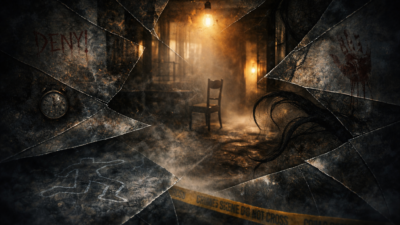

Psychological thriller writing is never about constructing clever plots or surprising the audience with twists.
It is always about engineering an experience.
The most powerful psychological thrillers are designed as interconnected systems where character psychology, narrative structure, perception and cinematic atmosphere function as one cohesive organism.
This is the distinction that separates ordinary thrillers from enduring psychological narratives.
In traditional storytelling, elements can exist independently:
- plot can be strong even if characters are simple
- visuals can be compelling even if structure is predictable
- dialogue can carry scenes even when atmosphere is neutral
But psychological thriller writing does not allow fragmentation.
Every element must reinforce the same psychological truth.
If one layer breaks alignment, the illusion collapses.
As explored in Article 1 : Psychological Thriller Craft: Writing from emotional collapse, the genre begins with an internal fracture.
In Article 2 : Psychological Thriller Tension: The Framework of Uncertainty, that fracture distorts perception and creates narrative instability.
In Article 3 : Designing an unreliable Protagonist: Psychology, symmetry and controlled disclosure, the character themselves becomes the least trustworthy lens.
In Article 4 : Cinematic atmosphere : Visual, sensory and emotional tension craft, the environment begins to reflect and amplify the mind.
This final article brings all of these together.
Because psychological thrillers are not built in parts.
They are engineered as systems.
Psychological thrillers as systems, not stories
Most writers approach storytelling in a linear way.
They begin with plot.
Then they develop characters.
Then they consider visual execution.
This approach works for many genres. Surely does.
Unfortunately, it fails in psychological thriller writing.
Psychological thrillers cannot be built step by step.
They must be designed as interconnected systems, where every narrative layer is influenced by the same psychological foundation.
The protagonist’s internal condition affects:
- how they perceive reality
- how the narrative is structured
- how information is revealed
- how scenes are paced
- how environments are experienced
Nothing operates independently.
If the protagonist’s psychology is unstable, the narrative must reflect that instability.
If perception is distorted, structure must accommodate that distortion.
If the internal world is fragmented, the external world cannot remain stable.
This systemic design is what allows psychological thrillers to feel immersive rather than constructed.
The audience need to experience a unified psychological reality.
This is the core principle of advanced psychological thriller writing.
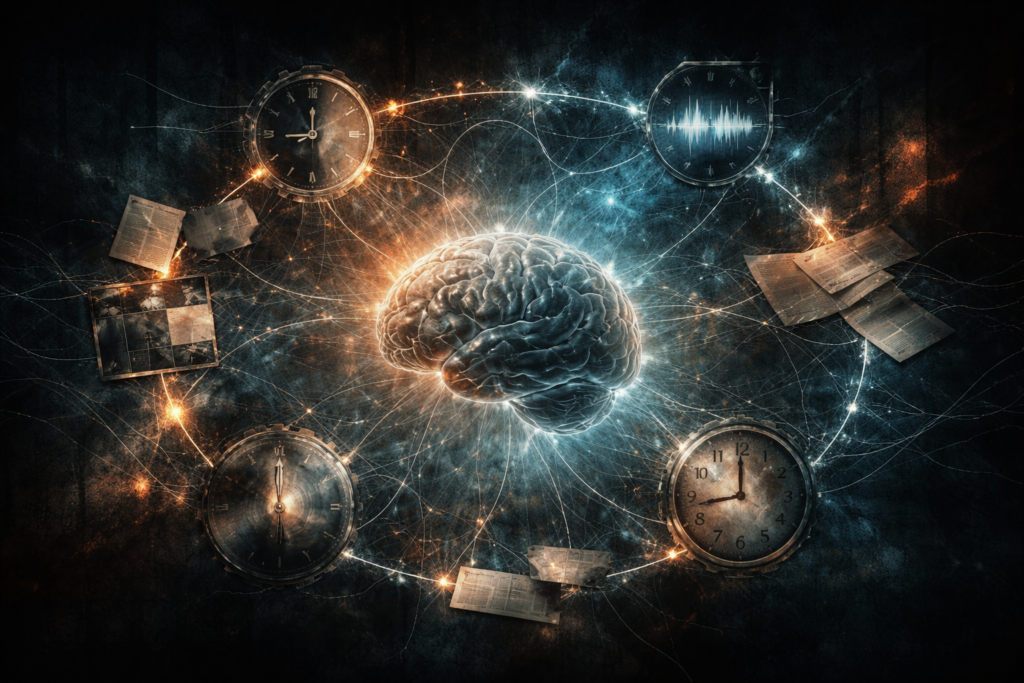
In Yohana’s World, the story is built as a psychological system.
At the center of that system is abandonment.
Yohana’s childhood trauma creates an internal rupture.
That rupture leads to:
- emotional dependency on imagined structures
- a need for control over perception
- a fragmented sense of identity
From this foundation, everything else emerges.
Her perception of reality becomes unstable.
Her interactions with others are filtered through emotional need.
Her investigation is influenced by internal conflict.
Even the environment begins to reflect her psychological condition.
The narrative structure, character behavior, pacing and visual design all originate from the same source.
Nothing exists independently.
This should not be considered accidental.
It is the result of system-level psychological thriller writing.
Alignment: when psychology, plot and atmosphere speak the same language
One of the most defining characteristics of powerful psychological thrillers is alignment.
Alignment occurs when every element of the narrative expresses the same emotional truth.
If a story explores guilt:
- the protagonist’s behavior reflects internal conflict
- the narrative structure introduces repetition or hesitation
- the atmosphere feels heavy or oppressive
If a story explores identity collapse:
- perception becomes unreliable
- structure fragments
- visual language becomes distorted
If a story explores control:
- environments feel rigid or suffocating
- pacing becomes deliberate and restrained
- dialogue reflects calculation
When these elements align, the story gains depth.
When they do not, the narrative feels artificial.
Misalignment creates confusion without meaning.
Alignment creates psychological coherence.
In psychological thriller writing, alignment should never be considered optional.
It is essential.
Because the audience is interpreting emotional signals across multiple layers.
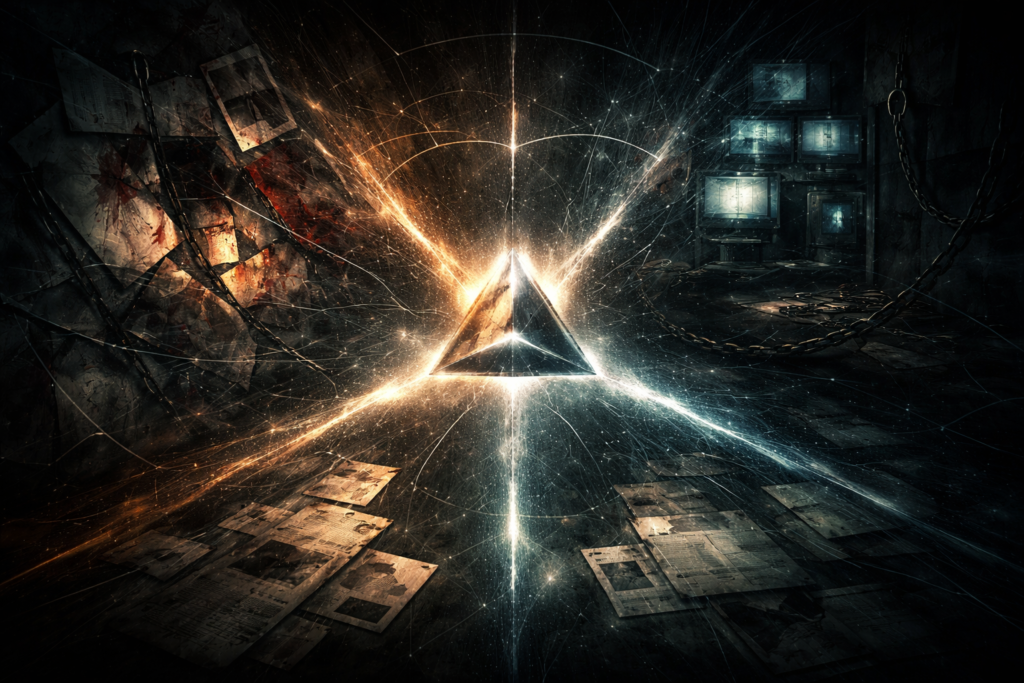
In Yohana’s World, the central psychological theme is abandonment and control.
This theme manifests across every layer of the narrative.
Yohana constructs an internal world where she is not alone.
Her imagination becomes a coping mechanism.
Her need for control shapes how she interacts with reality.
This psychological truth influences:
- how characters appear and behave around her
- how scenes unfold
- how environments feel
- how information is processed
Recurring motifs such as jasmine buds, shadows and flickering light are not aesthetic choices by design.
They are psychological signals that indicate something concrete.
The jasmine bud reflects suppressed truth beginning to surface.
Shadows represent internal engulfment.
Flickering light suggests instability in perception.
Every element reinforces the same emotional reality.
This alignment allows the audience to feel the story even before fully understanding it.
This is the power of psychological thriller writing executed as a unified system.
Controlled information flow in psychological thriller writing
Psychological thrillers are often misunderstood as stories that hide information.
In reality, they operate through controlled information flow.
The audience is never denied information.
They are simply given information in a way that leads to misinterpretation.
There is a crucial distinction.
The viewer:
- sees the clues
- hears the dialogue
- observes the behavior
But they interpret it incorrectly.
Why?
Because their understanding is shaped by the protagonist’s perspective.
This technique creates a powerful narrative effect.
When the truth is finally revealed, it does not feel artificial. It feels inevitable.
Because the truth was always present.
It was simply understood differently.
This is one of the most sophisticated tools in psychological thriller writing.
It allows the story to remain honest while still creating surprise.

In Yohana’s World, the readers are consistently exposed to Yohana’s internal world.
They see her interactions. They observe her companions. They experience her perception of reality.
But they interpret these elements as objective truth.
The narrative does not explicitly state that her perception is unreliable.
Instead, it allows the reader to assume stability.
This assumption becomes the foundation for misinterpretation.
As the story progresses, small inconsistencies begin to appear.
But they are subtle enough to be dismissed.
Only later does the full meaning emerge.
The reader realizes that they have been viewing the story through a distorted lens.
This is controlled information flow.
The truth was always present.
It was simply framed through Yohana’s perception.
This is advanced psychological thriller writing at a structural level.
Emotional continuity across the narrative
One of the greatest risks in psychological thrillers is breaking audience trust.
When major revelations occur, the audience reinterprets everything they have seen.
If the emotional foundation of the story shifts inconsistently, the viewer feels betrayed.
This is why emotional continuity is critical.
Even when:
- perception changes
- truth is revealed
- narrative meaning shifts
The emotional core must remain stable.
The audience should feel:
“I misunderstood the story.”
Not:
“The story misled me unfairly.”
In psychological thriller writing, this distinction determines whether the narrative feels intelligent or manipulative.
Emotional continuity ensures that even after major twists, the story remains balanced.

In Yohana’s World, Yohana’s emotional responses remain consistent throughout the narrative.
Her actions are driven by:
- a desire for connection
- a fear of abandonment
- a need for control
Even when the reader begins to question her perception, her emotional truth remains clear.
She cares. She struggles. She seeks meaning.
This consistency anchors the narrative.
When the audience reinterprets the story, they do not feel disconnected.
They feel deeper understanding.
Yohana’s emotional reality has always been visible.
Only its context changes.
This allows the story to maintain integrity while revealing new layers of meaning.
This is the foundation of psychological thriller writing that respects the reader/audience.
Why psychological thrillers have long-term value
From an investment perspective, psychological thrillers offer a distinct advantage over purely plot-driven narratives.
Plot-driven thrillers rely heavily on twists.
Once the twist is revealed, the story loses much of its impact.
Rewatch value is limited.
Psychological thrillers operate differently.
They rely on interpretation rather than surprise.
On a second viewing, the audience:
- notices previously overlooked details
- reinterprets character behavior
- understands symbolic elements
The story evolves with each viewing.
This creates:
- long-term audience engagement
- deeper critical appreciation
- increased discussion and analysis
- stronger cultural longevity
From an investor standpoint, this translates to sustained value.
Films that invite reinterpretation remain relevant.
They generate continued interest. They build lasting audiences.
This is why psychological thriller writing, when executed at a high level, offers significant long-term potential.

Yohana’s World is designed for layered engagement.
On the first viewing, the audience will experience:
- tension
- emotional conflict
- narrative mystery
On subsequent viewings, the audience will begin to:
- reinterpret earlier scenes
- recognize symbolic patterns
- understand the true nature of relationships
The story deepens with familiarity.
This creates:
- rewatch value
- audience discussion
- analytical engagement
The narrative is explored repeatedly.
This positions Yohana’s World not just as a film, but as a psychological experience with long-term value.
When story becomes an experience
Psychological thrillers are defined by experience.
When psychological thriller writing is executed at its highest level, the boundaries between character, narrative and environment dissolve.
The audience then inhabit the story than simply consuming it.
The protagonist’s mind becomes the world.
The world reflects the mind.
And the narrative becomes a system that continuously shapes perception.
This is what transforms a story into an experience.
This is what creates tension without action.
This is what gives psychological thrillers their enduring power.
Because when everything aligns:
- psychology
- structure
- perception
- atmosphere
The story becomes real.
Yohana’s World : A Psychological Thriller system
Available for Acquisition
Full Package at $555,000
Includes:
• Complete feature length 118 page screenplay
• Scene-by-scene narrative architecture
• Character psychological design system
• Visual language and atmosphere framework
• Symbolic and thematic mapping
• Long-term franchise potential
Yohana’s World is a designed psychological thriller system.
Built for:
- emotional immersion
- narrative depth
- rewatch value
- long-term audience engagement
For producers and investors seeking a psychological thriller with both creative integrity and lasting value:
Yohana’s World is ready.
Register your interest on Yohana’s World official website.
You are welcome to read the first 21 pages of the screenplay here.