
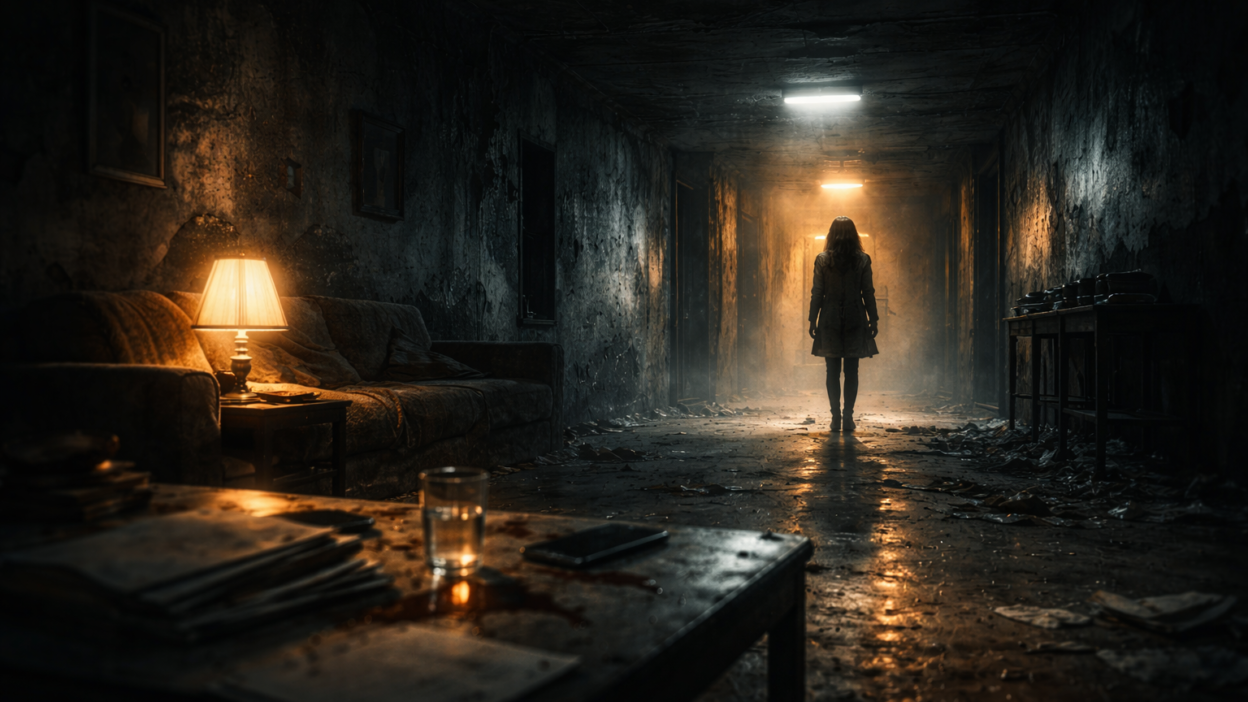
Psychological Thriller Framing begins with a deceptively simple idea: space is never neutral.
In most films, environments exist primarily as backdrops. Places where dialogue unfolds and actions take place. Walls separate rooms, corridors connect spaces and distances measure geography. But in psychological thrillers, space does something more profound. It becomes a psychological instrument.
Through Psychological Thriller Framing, filmmakers can transform empty rooms into emotional pressure chambers. Vast hallways stretch the mind as much as they stretch physical distance. A character standing alone in a large frame can feel more exposed than someone surrounded by visible threats.
The viewer may not consciously notice these space decisions, yet they feel their consequences instantly. The mind begins to interpret distance, emptiness and imbalance as signals of emotional instability.
Something about the world appears slightly off. Slightly unsafe.
That is the essence of psychological tension.
In this genre, tension accumulates through visual framework: the careful arrangement of bodies, walls, empty spaces and unseen territories within the frame.
This is where Psychological Thriller Framing becomes indispensable. It allows filmmakers to create pressure long before a character speaks or an event disrupts the narrative.
In my screenplay Yohana’s World, I have to attempted to treat spatial design as an emotional framework.
Where rooms breathe with tension. Corridors carry memory. Empty space represents anticipation.
The geography of the frame becomes the geography of the mind.
Negative space as a character
One of the most powerful tools in Psychological Thriller Framing is negative space.
Negative space refers to the empty regions surrounding subjects within a frame. In conventional storytelling, filmmakers often try to eliminate empty areas. They fill frames with objects, movement and background detail in order to maintain visual activity.
Psychological thrillers frequently do the opposite.
They embrace emptiness. They allow space to linger. They allow silence to expand.
Through Psychological Thriller Framing, negative space stops being empty and begins behaving like a character.
Negative space is one of cinema’s most subtle yet potent storytelling tools. By allowing a character to occupy only a small portion of the frame, filmmakers create an environment where the surrounding emptiness becomes psychologically active.
The viewer’s mind instinctively begins asking questions:
- Is someone approaching from the darkness beyond the frame?
- Is something hidden just outside the viewer’s sightline?
- Is the character truly alone?
Film theorist Bruce Block, in The Visual Story, argues that spatial relationships within the frame influence emotional intensity as much as movement or dialogue. When a subject is surrounded by large amounts of empty space, vulnerability increases dramatically.
The audience begins scanning the frame for signs of disturbance.
This scanning behavior is deeply psychological. Human perception evolved to detect motion and threat within surrounding environments. When Psychological Thriller Framing leaves large portions of the frame unoccupied, the viewer’s brain begins to fill the void with possibility.
Many psychological thrillers use this technique masterfully:
In The Shining, endless corridors and cavernous hotel interiors visually consume the characters wandering through them.
In Hereditary, characters often appear isolated within large, quiet rooms—emphasizing emotional disconnection within the family.
These visual strategies transform negative space into a zone of uncertainty.
The frame itself becomes active.
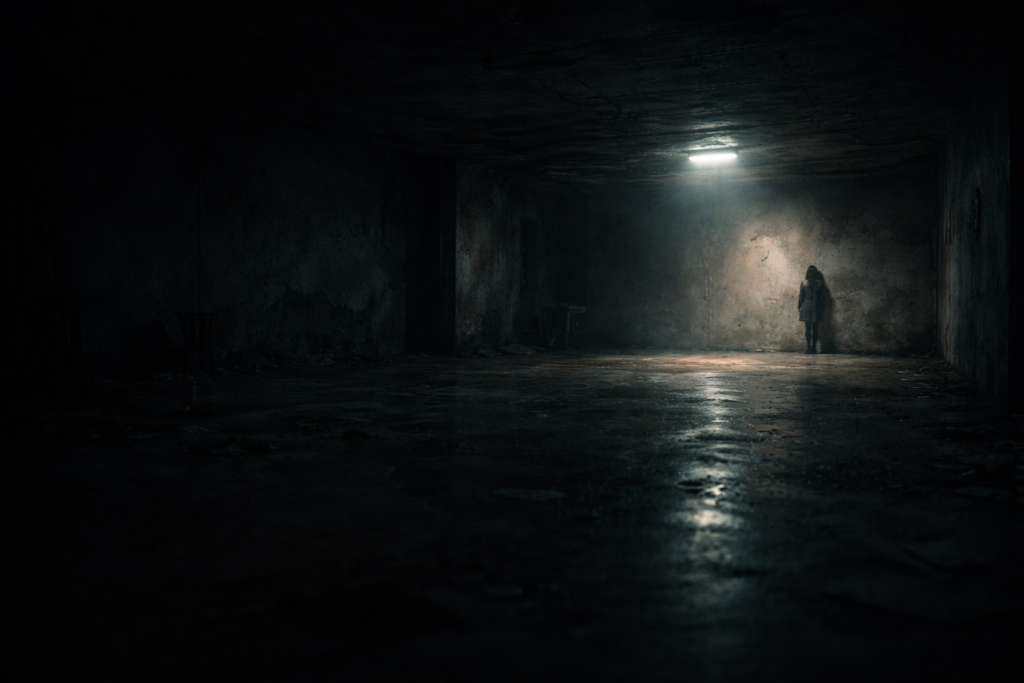
In my screenplay Yohana’s World, negative space functions as a psychological echo of Yohana’s internal state.
Rooms are rarely crowded with activity. Objects are spaced deliberately. Characters appear visually distant even when they share the same physical environment.
Through Psychological Thriller Framing, emptiness becomes emotional territory.
Yohana frequently appears surrounded by open space because her internal world occupies more psychological territory than the people around her.
The emptiness surrounding her suggests anticipation.
It suggests the possibility that something hidden within the quietness of the frame may soon surface.
In this way, negative space becomes a silent participant in the story.
Asymmetry and unease
Human perception instinctively seeks balance.
Symmetrical compositions, where visual elements mirror each other across the frame feel stable, orderly and reassuring.
Classical cinema often relied on symmetry to create harmony within images.
Psychological thrillers rarely grant that comfort.
Instead, Psychological Thriller Framing frequently introduces asymmetry.
Asymmetry occurs when the visual balance of the frame is intentionally disrupted.
- A character may stand slightly off-center.
- Architectural lines may guide the eye toward unexpected areas.
- Objects may appear to “weigh down” one side of the frame.
These disruptions create subtle psychological friction.
Even when viewers cannot consciously identify the imbalance, they feel it.
Their minds attempt to correct the frame’s lack of equilibrium and that cognitive effort translates into emotional tension.
Directors such as David Fincher and Stanley Kubrick frequently manipulated spatial symmetry and asymmetry to control emotional tone. Fincher’s meticulous framing often uses off-center compositions to create unease within otherwise calm environments.
Within Psychological Thriller Framing, asymmetry signals that something in the world may not be entirely stable.
The viewer senses imbalance before the narrative confirms it.
In Yohana’s World, asymmetrical compositions appear throughout the visual design.
- Doorways rarely sit perfectly centered.
- Objects interrupt otherwise balanced spaces.
- Characters occupy edges of frames rather than their visual centers.
These compositional decisions subtly destabilize the viewer’s perception.
Nothing appears dramatically wrong. But something does feel wrong.
The environment mirrors Yohana’s internal psychology: outwardly controlled but inwardly unsettled.
Through Psychological Thriller Framing, asymmetry becomes a visual reflection of emotional imbalance.
The world appears slightly misaligned, just enough to create unease.
Tight frames vs Empty rooms
Another defining characteristic of Psychological Thriller Framing is the constant shift between space confinement and overwhelming openness.
This contrast generates emotional rhythm within psychological narratives.
Tight framing places subjects close to the edges of the frame. This reduces the amount of visible environment surrounding them and increases psychological pressure.
The viewer feels confined alongside the character.
Breathing space disappears.
Attention focuses intensely on facial expression, body language and emotional reaction.
In contrast, wide framing places characters inside vast environments. Large rooms, long corridors and expansive landscapes expose the character to overwhelming emptiness.
The emotional effect changes completely.
Instead of feeling trapped, the character appears vulnerable.
Psychological thrillers frequently alternate between these two spatial states:
• claustrophobic interiors
• expansive architectural spaces
• confined emotional encounters
• overwhelming environmental exposure
These transitions create psychological rhythm within the film.
In Yohana’s World, the contrast between tight framing and vast spaces reflects Yohana’s fluctuating mental state.
At certain moments, the camera closes in.
- Rooms feel smaller.
- Objects crowd the edges of the frame.
- Faces occupy overwhelming proximity.
At other times, the world expands dramatically.
- Large rooms stretch around her.
- Hallways feel endless.
- Yohana appears visually diminished within the architecture surrounding her.
Through Psychological Thriller Framing, this oscillation between confinement and exposure becomes emotional storytelling.
The world sometimes presses inward: forcing confrontation with memory or guilt.
Other times it expands outward: leaving Yohana isolated within her own perception.
The geography of the frame mirrors the instability of the mind.
The Geography of Fear
Fear in psychological thrillers rarely arrives with immediate violence.
More often, it emerges from uncertainty about where danger might appear.
This is where space design becomes crucial.
Human perception constantly scans environments for motion, threat and change. Filmmakers can exploit this instinct through architectural framing.
- Long corridors guide the viewer’s gaze into darkness.
- Doorways reveal only partial information.
- Corners obscure what lies beyond.
These spatial elements invite the viewer to imagine possibilities outside the visible frame.
Alfred Hitchcock famously described suspense as the act of giving the audience information before the characters possess it. Spatial design allows filmmakers to apply this principle visually.
When viewers see areas of the frame that might contain unseen danger, tension increases immediately.
The audience becomes an active participant in scanning the environment.
Within Psychological Thriller Framing, fear does not require visible threat.
Possibility is enough.
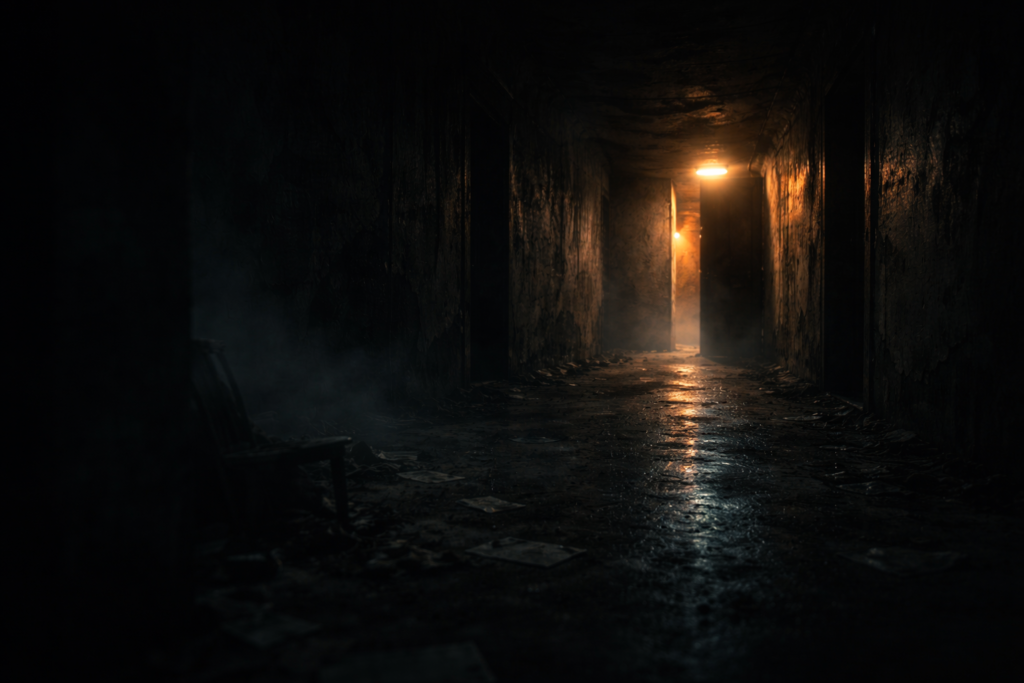
In Yohana’s World, spatial uncertainty replaces overt threat.
- Doorways lead into partially visible rooms.
- Corridors extend into shadow.
- Corners conceal unseen possibilities.
The viewer’s attention begins drifting toward areas of the frame that appear visually quiet but emotionally suspicious.
Through Psychological Thriller Framing, the environment becomes a psychological maze.
The viewer explores the space alongside Yohana, searching for meaning within silence.
The question here is not what is present, but what might be present. From there, fear emerges.
Spatial Design as Emotional framework
Ultimately, Psychological Thriller Framing treats space as emotional architecture.
- Walls do not merely divide rooms.
- Distance does not simply measure space.
Every spatial relationship carries emotional meaning.
- Isolation within the frame reveals emotional disconnection.
- Negative space invites unseen threat.
- Asymmetry destabilizes perception.
- Spatial contrast amplifies vulnerability.
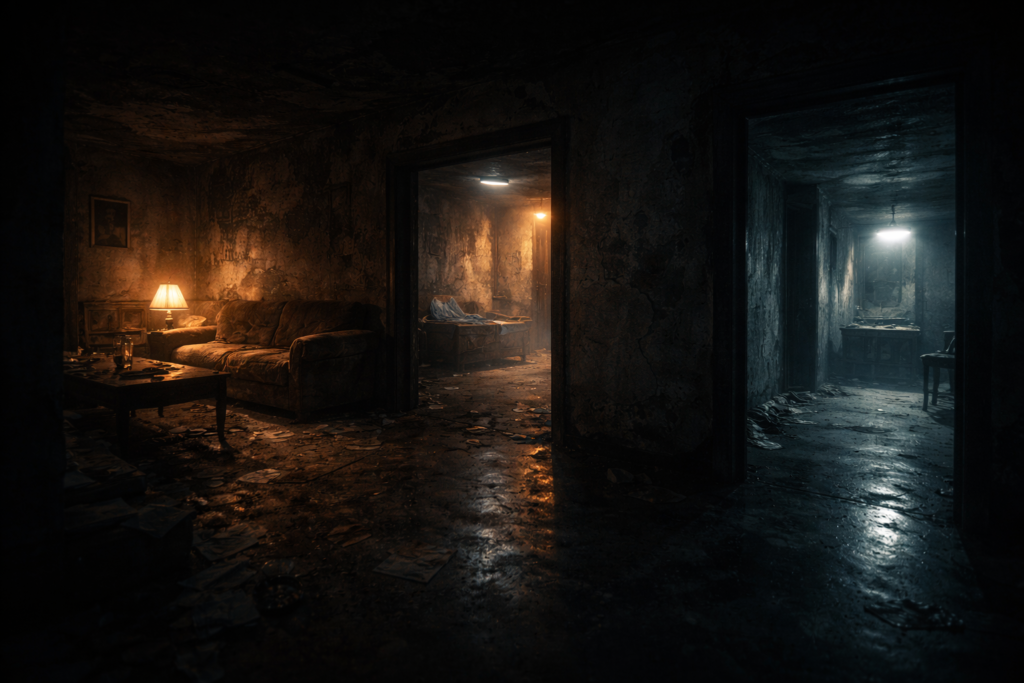
In Yohana’s World, these principles combine to construct a world that mirrors Yohana’s psychological terrain.
The environments she moves through are extensions of her perception and unresolved trauma.
Architecture becomes emotional. The frame becomes psychological. The world reflects the mind.
Why Spatial intelligence matters in Psychological Thrillers
For filmmakers and producers, Psychological Thriller Framing represents more than stylistic preference. It tells about cinematic maturity.
A screenplay that understands spatial design already contains the seeds of its visual identity. Directors, cinematographers and production designers can build upon this framework rather than invent it during production.
This visual intelligence allows:
• stronger cinematic tone
• clearer directorial vision
• deeper audience immersion
• more efficient development processes
In short, spatial design transforms a screenplay into a visual blueprint.
Yohana’s World is written with this blueprint embedded directly within the narrative.
The psychological framework already exists.
Isolation as Psychological territory
Isolation in cinema is emotional distance.
Through Psychological Thriller Framing, filmmakers transform this space into psychological tension.
In Yohana’s World, spatial design shapes how the audience experiences Yohana’s internal world.
The environments she inhabits are reflections.
And sometimes, the quietest spaces contain the loudest tension.
Yohana’s World is a psychological thriller built upon a deeply integrated visual philosophy, combining narrative tension with sophisticated technique called psychological thriller framing.
The project is currently available for direct acquisition at $555,000, including:
• Full feature-length 118 page screenplay
• Scene-by-scene narrative breakdown
• Detailed character psychology profiles
• Visual language and spatial design documentation
• Development and production reference materials
I bring to you a cinematic framework designed for psychological immersion.
Invest in Yohana’s World today, by registering on Yohana’s World official website.
Own the story. Build the world.