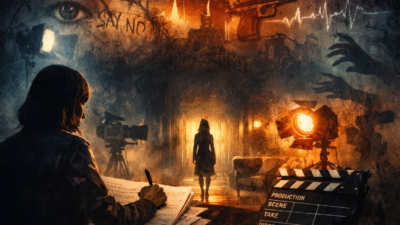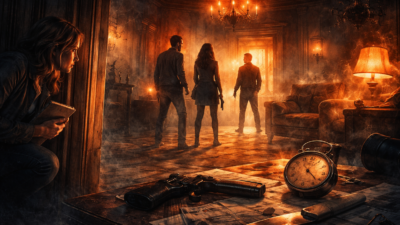
Psychological thriller protagonists are in reality, pressure systems.
Their fears distort perception. Their trauma shapes behavior.
Their hesitation stretches time. Their decisions reshape the emotional gravity of every scene.
In most genres, tension comes from external obstacles. A villain appears. A mystery unfolds. A problem must be solved.
But psychological thrillers operate differently.
In this genre, the protagonist is not merely reacting to the story.
The protagonist generates the story’s pressure.
Their inner conflict drives suspense. Their psychology alters pacing. Their behavior patterns influence how scenes unfold visually. Their internal instability often reshapes the environment around them.
Filmmakers understand this intuitively.
When designing psychological thriller protagonists, directors and writers are not simply asking:
What does this character want?
They are asking something far more powerful:
What tension does this character create simply by existing inside the story?
A well-designed psychological thriller protagonist transforms ordinary moments into suspense.
A phone call becomes unbearable. A silent room becomes threatening. A simple decision becomes emotionally explosive.
In my psychological thriller screenplay Yohana’s World, Yohana’s internal conflict does not remain hidden beneath dialogue. It spills into the world around her, reshaping environments, objects and perception itself.
Her psychology becomes visual. Her hesitation becomes tension. Her internal ruptures become cinematic language.
This article explores how can screenwriters and filmmakers design psychological thriller protagonists as systems of pressure that shape both narrative tension and visual storytelling.
Characters as generators of tension
As mentioned in the introduction, In many screenplays, tension comes from external obstacles.
A villain appears. A threat emerges. A problem must be solved.
But psychological thriller protagonists generate tension from within.
Their uncertainty delays action. Their hesitation stretches time.
Their internal conflict infects every decision.
This creates one of the most powerful storytelling dynamics in cinema.
The audience is waiting to see what the protagonist will do next.
And that waiting produces suspense.
Screenwriters must understand this deeply.
They need to design psychological thriller protagonists whose emotional instability transforms ordinary scenes into tension-filled moments.
For example, a simple conversation can become suspenseful if the protagonist hesitates to reveal the truth.
A quiet hallway becomes threatening if the protagonist fears what they might discover at the end.
The tension does not originate from the environment. It originates from the character.
Psychological thriller protagonists therefore act as narrative engines rather than passive participants in the story.
Their emotional instability stretches time. Their internal resistance delays resolution.
And that delay creates cinematic tension.

In Yohana’s World, the protagonist’s reluctance to return to Los Angeles becomes the first major source of narrative pressure.
The city represents unresolved trauma for Yohana.
Her hesitation to confront that past creates tension long before the investigation truly begins.
Even routine decisions carry emotional gravity.
Reading a diary entry. Returning a phone call. Walking into a location tied to memory.
Each moment becomes suspenseful because Yohana herself is unstable.
The audience is watching a mind under pressure.
And that pressure generates tension.
Psychological flaws as cinematic opportunities
Many screenwriters treat character flaws as personality traits.
But in extension, filmmakers treat them as cinematic opportunities.
A psychological flaw should influence how scenes look, feel and move.
Fear alters body language. Guilt alters eye contact. Shame alters posture. Obsessive behavior alters pacing.
These behavioral shifts give filmmakers visual material to work with.
Actors interpret these flaws physically. Cinematographers respond through framing and lighting. Editors shape rhythm around emotional hesitation.
When psychological thriller protagonists are written with behavioral precision, their flaws become storytelling tools rather than background traits.
This transforms character psychology into visual storytelling.
The flaw then becomes cinematic.
Yohana’s unresolved trauma manifests visually throughout my screenplay Yohana’s World.
During moments of psychological strain, the environment around her begins to react.
Walls crack. Shadows behave independently. Words appear carved into surfaces during moments of emotional conflict .
These elements represent the internal pressure within Yohana’s mind.
Her psychological flaw reshapes perception and the world reflects her emotional rupture.
This approach turns character psychology into cinematic language.
Behaviour patterns shape scene flow
Screenwriters need to pay close attention to behavioral patterns when designing psychological thriller protagonists.
How does the character move under stress? Do they withdraw from confrontation or escalate it? Do they avoid eye contact or dominate physical space?
These patterns influence blocking, pacing and scene composition for the filmmaker.
A character who withdraws from confrontation generates tension through delay. A character who reacts impulsively generates tension through volatility.
Behaviour patterns create rhythm within scenes. They determine how tension builds and releases.
For example:
A character who hesitates before answering questions creates prolonged silence. A character who speaks impulsively accelerates conflict.
These behavioral rhythms shape the film’s pacing.
Filmmakers often design scenes specifically around these patterns.
Because behavior reveals psychology.
And psychology drives tension.
We screenwriters ought to be aware of this.

Yohana’s behavior patterns emphasize withdrawal during emotional pressure in Yohana’s World.
She often clutches her purple diary when overwhelmed. She rocks slightly as conflicting voices escalate around her .
These behaviors slow scenes intentionally.
They introduce pauses where decisions could occur but do not.
The delay intensifies tension.
Her hesitation becomes part of the film’s rhythm.
This behavioral design now ensures that the tension emerges naturally from the character rather than being forced by external events.
Writing characters who distort the world around them
The most compelling psychological thriller protagonists distort their story world.
Their perceptions alter how the environment appears. Their emotions influence visual atmosphere. Their psychological instability reshapes reality.
This distortion can manifest through cinematic techniques such as:
- Shifting lighting
- Distorted sound
- Unstable environments
- Symbolic imagery
- Recurring motifs
When the protagonist’s internal state influences the environment, the film’s visual language becomes an extension of their psychology.
The world then becomes subjective.
The audience experiences events through the protagonist’s ruptured perspective.
This approach transforms psychological tension into cinematic imagery.
In Yohana’s World, environmental distortions frequently accompany Yohana’s internal conflict.
Buildings appear unstable during moments of emotional strain. Shadows stretch unnaturally across walls. Objects shift slightly out of alignment .
These visual cues signal psychological tension without requiring dialogue.
The environment becomes a reflection of Yohana’s mental state.
The audience will tend to experience reality through her broken perception.
This technique transforms psychological tension into visual storytelling.
I talk more about visual storytelling in my previous article. Do check it out here
Designing an inner world that becomes visual language
Every strong psychological thriller protagonist possesses an inner symbolic language.
This language consists of images, objects or motifs tied to their psychological state.
These elements must appear repeatedly throughout the film.
They evolve as the character evolves.
For example:
An object tied to memory might appear during moments of emotional stress. A recurring visual symbol might signal the return of suppressed trauma. A specific color or texture might represent psychological transformation.
Over time, the audience learns to read these visual signals.
The character’s inner world then becomes visible.
This transforms character psychology into visual storytelling.
Filmmakers often build entire visual systems around these motifs. We screenwriters need to understand this too.
Because when psychological thriller protagonists possess symbolic language, the film’s imagery gains emotional coherence.

In Yohana’s World, several visual motifs reinforce the protagonist’s psychological journey.
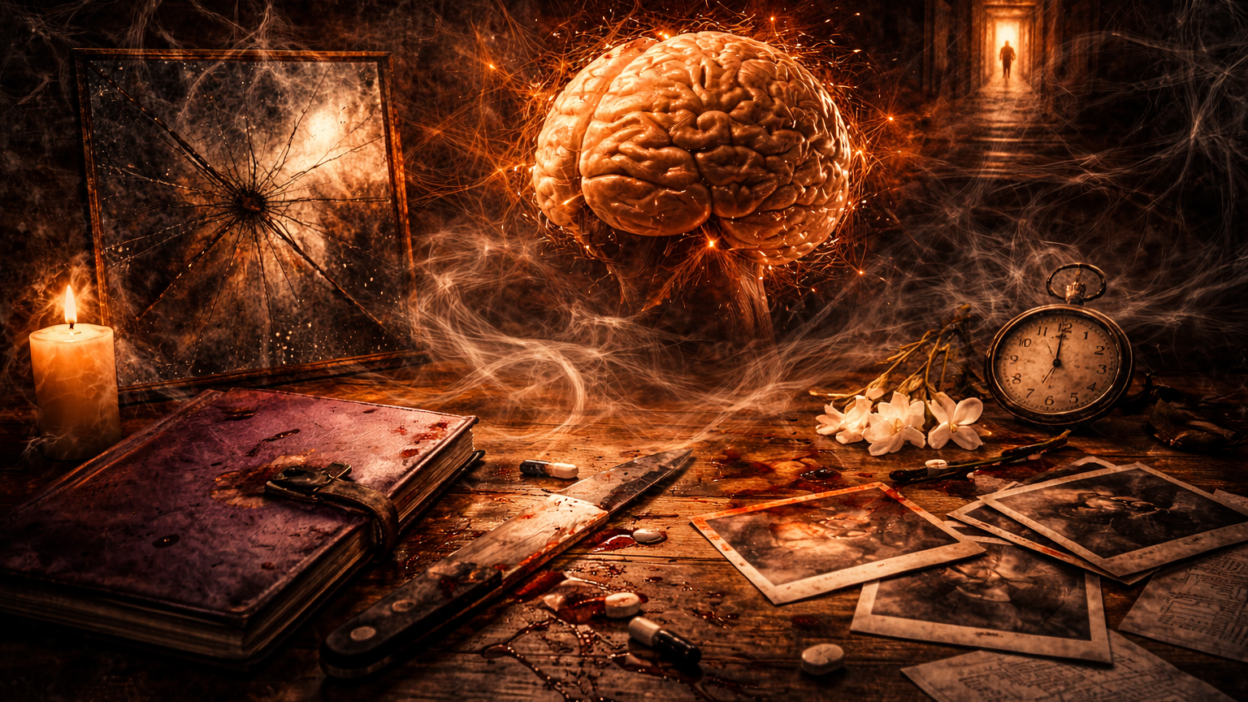
The purple diary appears repeatedly as an anchor for suppressed memories . Shadows behave unnaturally during moments of emotional strain.
Jasmine buds slowly open as buried truths begin to surface.
These recurring images form a visual language tied directly to Yohana’s internal state.
The audience gradually learns to interpret them.
This approach allows character psychology to shape the film’s visual identity.
Psychological Thriller Protagonists as systems of pressure
The most compelling psychological thriller protagonists do more than pursue goals.
They create pressure. Their fears delay decisions.
Their flaws shape behavior. Their perceptions distort reality.
And their inner worlds influence visual storytelling.
When designed carefully, these elements generate tension organically.
Scenes become suspenseful not because something dangerous is to happen, but because the protagonist’s psychological state makes every decision uncertain.
Filmmakers understand this principle deeply. Screenwriters must too.
They must design characters whose internal pressure reshapes the film itself.
Because in psychological thrillers, the most dangerous force in the story is often the protagonist’s own mind.
A confident invitation
If you are interested in psychological thriller protagonists designed as cinematic pressure systems, Yohana’s World offers a fully developed blueprint.
The screenplay package includes:
• Full 118 page screenplay
• Scene-by-scene breakdown
• Psychological character architecture
• Visual language framework
• Structural beat map
I present to you a complete cinematic design system built around psychological storytelling.
The entire project is available for direct acquisition at $555,000.
Register your interest on Yohana’s World official website.
You are also welcome to read the first 21 pages of the screenplay here.
Lastly, remember:
The most compelling psychological thriller protagonists do more than pursue goals.
Their psychology reshapes perception, influences environment and becomes the engine of suspense itself.
When character design reaches this level, the film’s tension emerges naturally from the protagonist’s inner world.