How filmmakers engineer psychological thriller suspense and tension through blocking, pacing and internal conflict : A subjective view.
It is engineered.
This distinction matters more than most of us writers realize.
Many of us tend to believe suspense comes from dramatic twists, shocking reveals or sudden bursts of violence. We focus on surprise. We chase the unexpected.
We assume tension is something that appears once the plot becomes intense enough.
But in my opinion, and I am differing here. Shock is just a moment.
Psychological thriller suspense is a structure on its own.
It is built deliberately. Through space, information control and internal hesitation.
If we want to master suspense in psychological thrillers, we must stop thinking like a writer arranging events and start thinking like a filmmaker designing pressure.
Because suspense is not about what happens.
It is about how long the audience feels something coming.
My latest article here, explores how filmmakers are likely to construct psychological thriller suspense systems and how I apply the same principles in my screenplay Yohana’s World.
Suspense is engineered
At its core, psychological thriller suspense is mechanical.
It is built from three primary components:
- Delayed outcome
- Controlled information
- Spatial vulnerability
Suspense does not emerge from dramatic dialogue.
It does not depend on loud sound design.
It is not sustained by constant action.
It is constructed through duration.
Open Culture has an informative article on the difference between surprise and suspense.
When an outcome is delayed, anticipation expands.
When information is partially revealed, curiosity intensifies.
When a character is placed in spatial vulnerability, anxiety deepens.
Together, these elements stretch time.
And stretched time creates pressure.
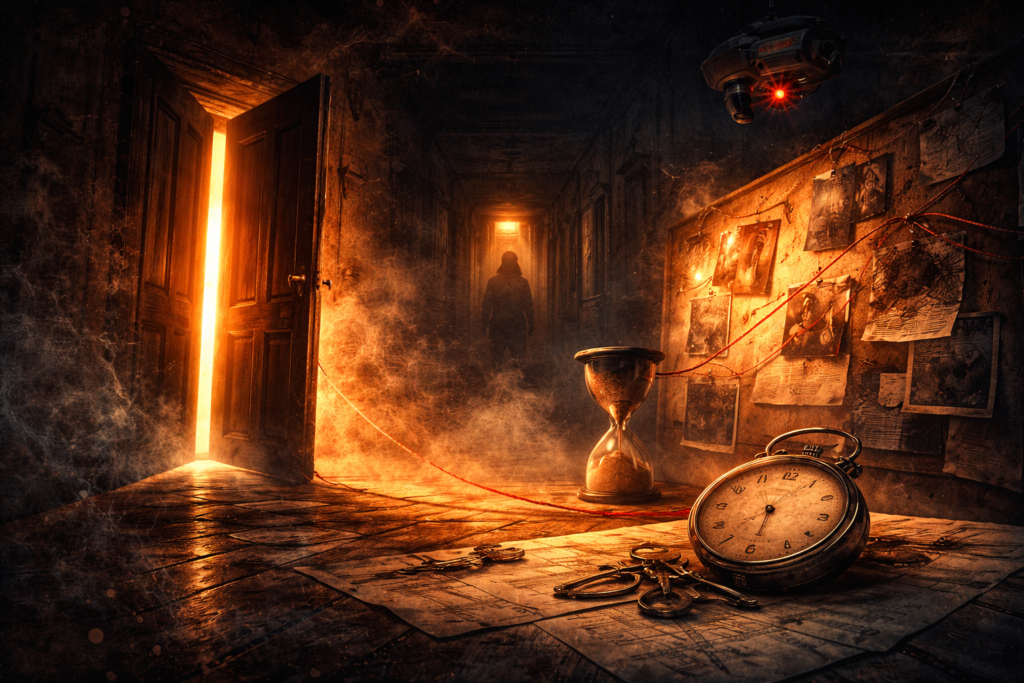
Filmmakers do understand something many of us writers overlook: suspense lives in duration.
If a door bursts open immediately, you get shock.
If it creaks open slowly while we anticipate what is behind it, what we get is psychological thriller suspense.
Think it in terms of orientation.
Shock is vertical. Quick and explosive.
Suspense is horizontal. Sustained and immersive.
Horizontal tension sustains a film.
The opening sequence of Yohana’s World does not rely on exposition to create tension.
A wounded hand reaches for a ringing phone on a deserted road. A shadow crosses the frame. Silence lingers before gunshots rupture it.
Nothing jumps out immediately.
Instead, the scene breathes in tension.
Later, in the morgue sequence, flickering lights and scraping sounds precede any visible threat.
The audience waits.
That waiting is engineered.
This is psychological thriller suspense built through delay.
Scene Geometry : Where a Character stands changes meaning
In my study of the craft, filmmakers think spatially.
In psychological thriller suspense, blocking is mostly strategic.
Where a character stands determines:
- Power
- Vulnerability
- Isolation
- Control
Center frame suggests authority.
Edges suggest instability.
Doorways imply transition.
Corners imply entrapment.
Distance between characters defines emotional tension.
Close proximity without movement creates compression.
Wide spacing creates exposure.
Suspense intensifies when space becomes a silent antagonist.
Also if we as writers, write dialogue before designing geometry, we are likely to miss half the tension.
Because spatial relationships communicate before words ever do.
In the café meeting scene on Page 8 of the screenplay, tension is embedded in placement. Ava leans forward anxiously. Stephen checks his watch. Yohana remains composed. Zuri and Ayden stand behind her like psychological extensions.
Power shifts are visual before they are verbal.
In the living room confrontation on Page 15 of the screenplay, bodies cluster and escalate physically while Yohana remains seated, absorbing all the conflict at the center of chaos.
In the morgue scene on Page 21 of the screenplay, isolation becomes an architecture in itself. Cold metal surfaces. Flickering lights. No visible exits.
This is psychological thriller suspense shaped by geometry.
Space should never be neutral.
Information control vs shock
One of the most misunderstood elements in psychological thriller suspense is information control.
Shock occurs when the audience learns something simultaneously with the character.
Suspense occurs when the audience senses more or less than the character.
This imbalance creates tension.
If viewers are completely informed, tension collapses.
If viewers are completely uninformed, confusion replaces suspense.
The key is calibrated revelation.
Enough information to anticipate danger. Not enough to resolve it.
Suspense thrives in that gap.
Filmmakers generally design this gap intentionally.
We writers must learn to do the same.
In Yohana’s World, binocular POV shots on Page 20 of the screenplay reveal that someone is watching Yohana before she fully comprehends the scope of danger.
The audience becomes uneasy before she does.
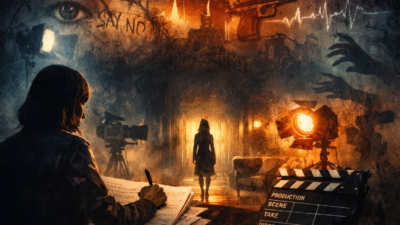
Similarly, words like “SAY NO” and “DENY” appearing on walls expose her internal conflict visually before she articulates it.
Information must be layered, not dumped.
This layering sustains psychological thriller suspense across scenes.
Because suspense in psychological thrillers is rarely about what happened.
It is always about what might happen next.
Writing with spatial logic
Writing with spatial logic is a filmmaker’s advantage.
Before writing a suspense scene, we must ask:
- Where are the exits?
- What obstacles exist?
- Who controls the space?
- What objects could become threats?
- What is visible?
- What is obscured?
If as writers, our scenes occur in an empty void and function the same way, they lack strength.
Psychological thriller suspense relies on environment as active participant.
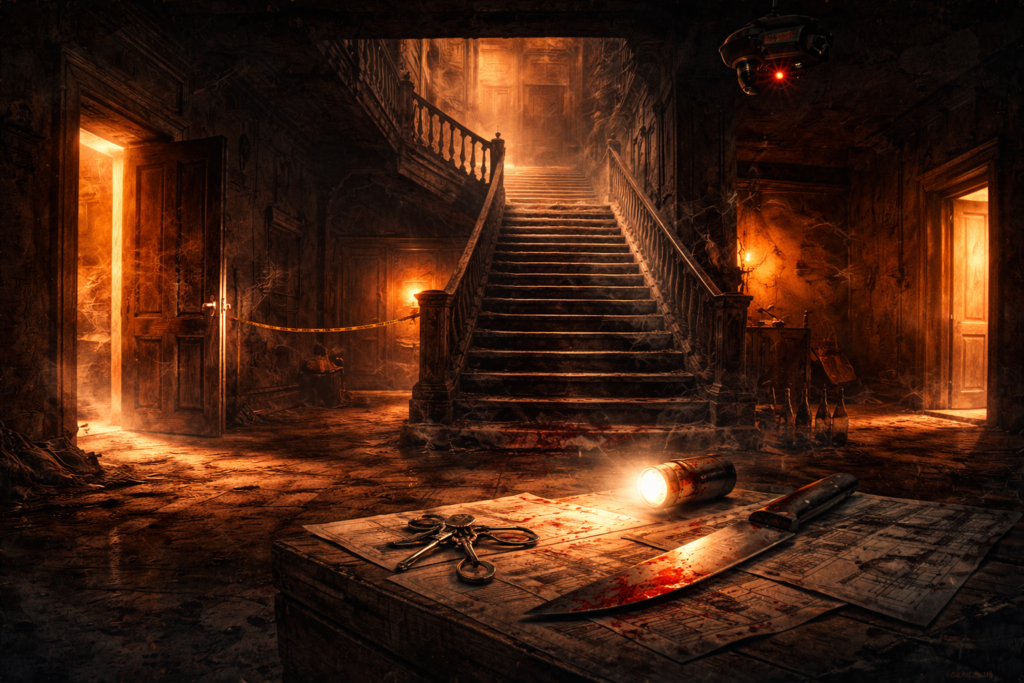
Staircases create vertical tension.
Hallways create linear dread.
Open spaces create vulnerability.
Small rooms create contraction.
Environment is treated like a weapon and filmmakers design space to restrict movement and amplify hesitation.
Writers, in their writing must try to implement the same.
In the public garden scene on Page 4 and 5 of the screenplay Yohana’s World, a rickety ladder introduces instability before conflict escalates.
In the State Social House exterior scene on Page 11 of the screenplay, a parked car and masked observer establish surveillance and vulnerability through arrangement alone.
In the morgue scene on Page 21 of the screenplay, sliding chambers and sudden darkness transforms the space into entrapment.
Each scene is designed measurably before dialogue is written.
That is how psychological thriller suspense becomes immersive.
Pacing as structural pressure
Psychological thriller suspense also depends on rhythm.
I am not speaking about speed here. But rhythm.
Constant action exhausts the audience. Constant stillness dulls them.
Effective suspense alternates between:
- Slow build
- Micro-release
- Escalation
- Nothingness
- Acceleration
Think of pacing as our breath control.
When internal resistance slows action, tension grows.
When escalation follows hesitation, release feels earned.
Suspense requires modulation. Without rhythm, tension is simply noise.
In Yohana’s World, there are moments where Yohana rocks back and forth clutching her diary that slow time intentionally.
Then there is the morgue blackout scene which stretches seconds into discomfort before movement is revealed.
Psychological thriller suspense lives in these stretched beats.
Because anticipation intensifies when nothing resolves immediately.
Internal conflict as suspense engine
The strongest psychological thriller suspense comes from hesitation.
When a character resists action, every decision becomes loaded.
Will they open the door?
Will they answer the call?
Will they confront their past?
Internal resistance stretches time.
And stretched time creates tension.
The audience waits. That waiting is suspense.
External danger is immediate. Internal hesitation is prolonged.
Prolonged tension sustains narrative momentum.
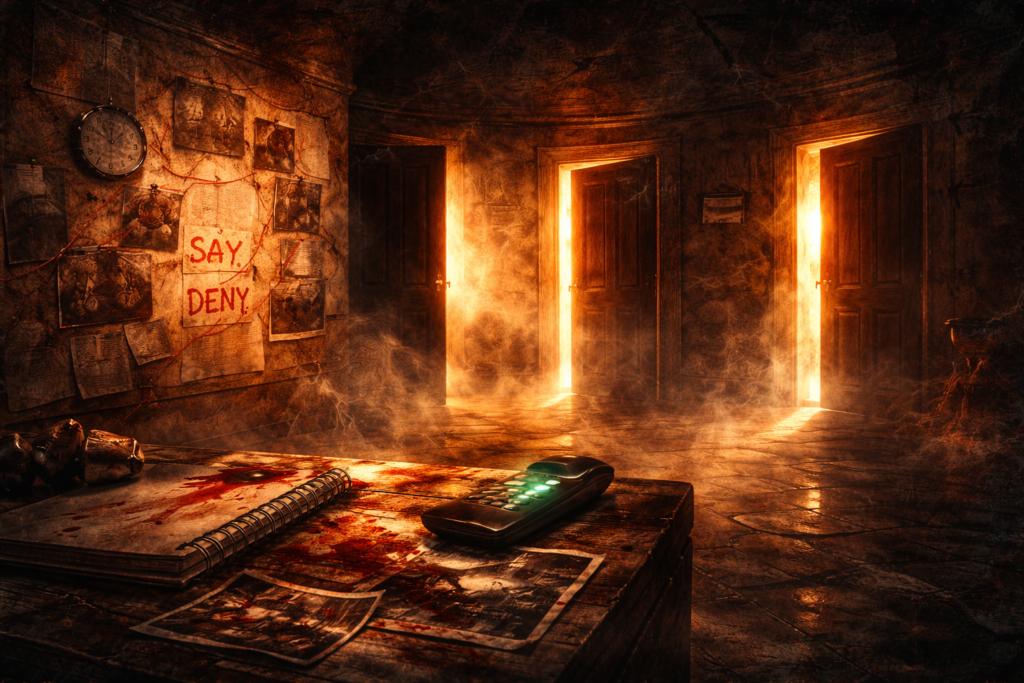
Yohana’s reluctance to return to Los Angeles generates suspense long before the investigation even begins.
Her psychological resistance manifests visually through distortions, spatial reactions and environmental shifts.
The murder case drives plot. Her internal war drives that true psychological thriller suspense.
Because in the end, the greatest threat is not outside. It is within.
A confident invitation
Writing of a Psychological thriller suspense should not be accidental. It must be the result of immersive control, pacing discipline and psychological hesitation engineered at the script level.
When filmmakers approach suspense with a system, tension becomes inevitable rather than improvised.
If you are serious about mastering psychological thriller suspense at a cinematic level, Yohana’s World offers a fully engineered blueprint.
I don’t consider Yohana’s World to be a mere screenplay.
It includes:
- Scene-by-scene suspense architecture
- Immersive blocking design
- Psychological conflict mapping
- Visual tension systems
- Pacing framework
- Internal-to-external transformation mechanics
The complete cinematic package is available for direct acquisition at $555,000.
For story collectors, producers, studios and visionary investors seeking a psychological thriller engineered (not improvised), this is an opportunity to invest in a fully constructed suspense system.
Register your interest on Yohana’s World official website.
Remember, a psychological thriller suspense story, when designed correctly, is a city on its own.
And Yohana’s World, in my most humble opinion, is its capital.